
www.magazine-industry-usa.com
23
'26
Written on Modified on
ANDRITZ Supplies Biomass Refining Technology for Ethanol Production
Refining systems support mechanical pre-treatment of agricultural residues to enable scalable production of cellulosic ethanol and low-carbon fuels.
www.andritz.com
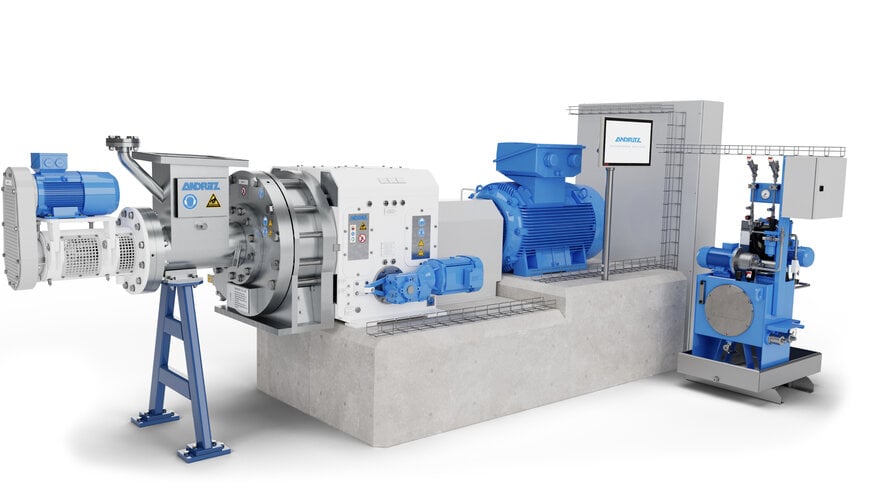
Producing low-carbon fuels from agricultural residues requires efficient biomass pre-treatment to enable reliable conversion processes. ANDRITZ has supplied refining technology for a new pilot plant in Liberal, Kansas, designed to convert corn stover and similar feedstocks into cellulosic ethanol for transport applications.
The pilot facility, developed by SAFFiRE Renewables, targets sectors such as heavy-duty transport, rail, marine, and aviation, where reducing emissions remains technically challenging. The integration of mechanical refining systems supports the broader objective of scaling sustainable fuel production using domestic biomass resources.
Mechanical refining for biomass pre-treatment
The supplied system includes a single-disc high-consistency refiner and a CompaDis CDI low-consistency refiner, with a processing capacity of 10 tonnes per day. These units are designed to mechanically process lignocellulosic biomass, breaking down its संरcture to improve accessibility for subsequent biochemical conversion into ethanol.
This pre-treatment step is critical in cellulosic ethanol production, as agricultural residues such as corn stover require structural modification before enzymatic or chemical processing. Mechanical refining enables more uniform fiber separation, which can improve conversion efficiency and process consistency.
Supporting scalable low-carbon fuel production
The pilot plant serves as a demonstration platform for scaling cellulosic ethanol technologies. In addition to direct use as a low-carbon fuel, the produced ethanol can be further processed into sustainable aviation fuel (SAF), bio-based chemicals, or materials.
The refining systems contribute to process reliability and enable continuous operation, which is essential for evaluating the commercial viability of next-generation biofuels. The approach also aligns with increasing demand for alternative fuels that can integrate into existing infrastructure while reducing lifecycle greenhouse gas emissions.
Integration with advanced pre-treatment processes
The project incorporates Deacetylation and Mechanical Refining (DMR) technology, which combines chemical and mechanical steps to optimize biomass conversion. Within this framework, the refining equipment plays a central role in preparing feedstock for downstream processing.
The use of both high- and low-consistency refining allows flexibility in handling different biomass conditions and processing stages. This dual approach supports more controlled material handling and can improve overall system efficiency in pilot-scale operations.
Pilot plant deployment timeline and industrial context
The refining technology forms part of a broader pilot plant setup in Liberal, Kansas, with start-up planned for the first quarter of 2027. The project reflects ongoing industrial efforts to develop scalable solutions for cellulosic ethanol production and reduce dependence on fossil-based fuels.
Such pilot facilities are essential for validating process performance, optimizing operational parameters, and supporting future commercial-scale deployment. By enabling efficient use of agricultural residues, the technology contributes to expanding feedstock options for the biofuels sector.
Edited by Industrial Journalist Natania Lyngdoh — Adapted by AI.
www.andritz.com
-2296-71282-204124.png)