
www.magazine-industry-usa.com
05
'26
Written on Modified on
Solar Power for Manufacturing Industries
The rationale, feasibility, benefits, challenges, and the road ahead for use of solar power by manufacturing industries.
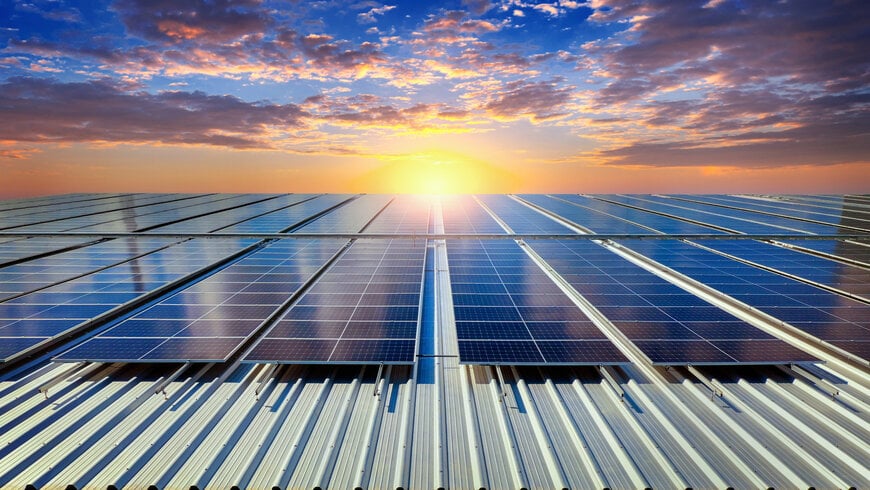
Solar power is a source of clean and green alternative power supply. Photo by Tawatchai07 on Freepik
At a time when the manufacturing industry is facing multiple challenges ranging from rising energy costs to battling environmental issues, solar power offers a very good alternative as a source of clean energy. Conventional energy sources like coal fired power plants and captive power plants powered by fossil fuels are not only seen as highly polluting, but are also dependent resources that are rapidly depleting, and the exploitation of which is environmentally degrading. What began as a supplementary source of energy has now become mainstream as solar power is gaining popular acceptance.
The case for solar adoption
According to the US Energy Information Administration, a publicly funded organisation providing independent statistics and analysis to the American people, manufacturing industries account for approximately 33% of global electricity consumption. Manufacturing is highly energy-intensive, a major cost component that directly impacts profitability. This is especially true for areas that have high tariffs for industry besides unreliable grid connectivity.
Solar power in such a scenario not only makes perfect sense as a source of clean and green alternative power source, but has today become highly cost-effective. Thanks to their growing popularity, the cost of solar photovoltaic modules have witnessed a sharp decline in recent years with economies of scale kicking in. As a result, a wide range of industries across size and scale, have started adopting solar power as an option to supplement regular grid supply.
Another factor is the net-zero target – the commitment by countries, and corporations to balance the amount of greenhouse gas (GHG) emissions with an equivalent amount removed, thus achieving a net result of zero emissions. This is in line with the Paris Agreement – ratified by 195 countries globally as on date – which requires manufacturing companies to accelerate decarbonisation, shifting from voluntary sustainability to mandatory, transparent emissions reductions to meet the net-zero targets. Adopting solar power is thus the need of the hour.
The feasibility of solar power
While solar power has been in commercial use for several years now, for manufacturing industries, there are a host of factors that come into consideration before implementation. These are summed up briefly in the following paragraphs.
First and foremost is space – solar panels need space for installation – expansive surface area for the panels. Ground-mounted or rooftop are the two common methods. Even if the plant does not have unused land in its surroundings, rooftops are ideal for installation.
The second important consideration is usage pattern. Industries that operate in daylight hours have a natural advantage, aligning with solar power generation with minimum reliance on storage, or the dependency on grid connectivity for import.
The third, and a critical factor, is grid connectivity and net metering regulations of the utility. It is important to understand beforehand if utilities are restricting, capping, or reducing compensation for excess power fed back into the grid, which reduces the economic benefit for solar owners. Solar power is capital-intensive, even as the RoI is attractive, and often inconsistent policies and regulatory delays discourage adoption.
Finally, there is the appropriate financial model to choose – whether to go for outright ownership or prefer options such as Power Purchase Agreements (PPAs), leasing, and third-party ownership models, which lower the entry barriers. This way manufacturers can adopt solar without significant upfront capital expenditure, paying only for the energy consumed.
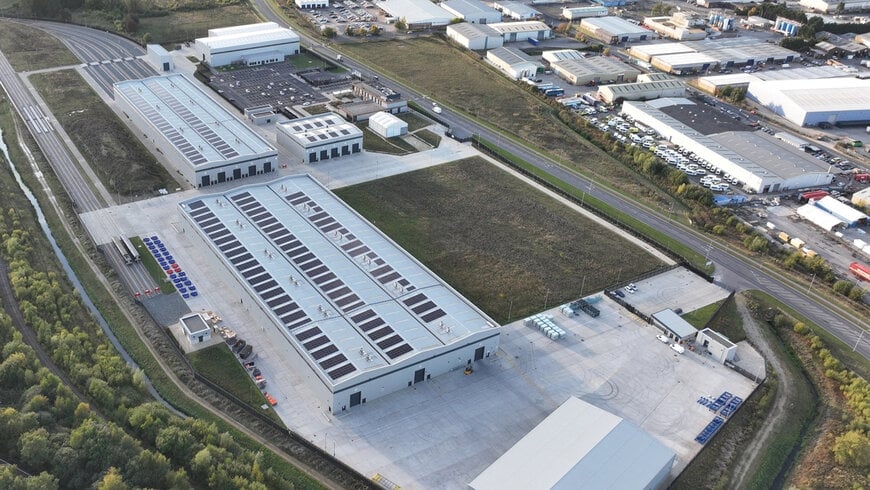
Siemens Mobility’s range of solar installations at its Goole Rail Village, Yorkshire – UK. Photo source: Siemens Mobility
The many advantages of solar
Integrating solar power in their energy mix brings many advantages to manufacturing industries that go beyond the conventional Environmental, Social, and Governance (ESG) metrics. These include:
1. Cost savings and energy security: Solar power offers predictable energy costs over the long term, protecting manufacturers from routine tariff hikes and fuel price fluctuations. Once installed, solar systems have low operating costs and can generate electricity for 20-25 years.
2. Sustainability and carbon reduction: Solar energy is clean and non-polluting, which significantly reduces greenhouse gas emissions. For manufacturers aiming to achieve net-zero targets, solar installations provide a tangible and measurable contribution.
3. Improved brand value and market advantage: Sustainability is increasingly influencing purchasing decisions. Solar adoption improves a company’s ESG rating and enhances brand image and appeal to environmentally conscious customers and global partners.
4. Operational reliability: Used in combination with energy storage and/or hybrid systems, solar power can enhance energy reliability, reducing downtime caused by grid outages. This is an important factor in maintaining production continuity.
5. Regulatory compliance and incentives: Across the world, governments today are promoting renewable energy adoption through a mix of subsidies, tax incentives, and favourable policies. Early adopters can leverage these benefits to improve project economics.
Challenges and limitations
Despite its advantages, solar power adoption in manufacturing is not without challenges. These include:
1. Intermittency and storage needs: By its very nature, solar generation is intermittent, dependent as it is on the availability of sunlight. For industries with round-the-clock operations, this necessitates energy storage solutions or hybrid systems, which can increase costs.
2. High initial investment: While costs have decreased, the upfront investment for solar installations can still be significant, especially for large-scale systems. Although financing options exist, they may not suit all businesses, especially the small enterprises.
3. Space constraints in urban facilities: Manufacturing units located in dense urban areas may face limitations in rooftop space or structural capacity, restricting the scale of solar deployment. With high property prices, acquiring additional space is not feasible.
4. Regulatory and policy uncertainty: Frequent changes in policies related to tariffs, net metering, and open access can impact project viability. Manufacturers must navigate a complex regulatory landscape that varies by region, which is a significant risk.
5. Maintenance and performance issues: Although solar systems are relatively low-maintenance, factors such as dust accumulation, shading, and equipment degradation can affect performance. Regular monitoring and maintenance are essential to ensure optimal output.
Integrating solar with industrial systems
The true value of harnessing solar power for industrial applications does not end with the installation of solar panels on the rooftop or on ground. In fact that is just the first step. To unlock the true potential, the clean electricity thus generated must be integrated intelligently with industrial operations. This can be achieved by using advanced energy management systems to optimise the use of solar energy in real time, aligning generation with consumption patterns.
Digital technologies such as IoT, AI, and data analytics play a crucial role here. By analysing energy usage and forecasting solar generation, manufacturers can make informed decisions on load scheduling, storage utilisation, and grid interaction. For example, non-critical processes can be scheduled during peak solar generation hours, maximising the use of clean energy.
Hybrid systems that combine solar with other renewable sources, diesel generators, or grid power offer flexibility and reliability. Battery storage, although still evolving in terms of cost and efficiency, is becoming an increasingly viable option for smoothing out energy supply.
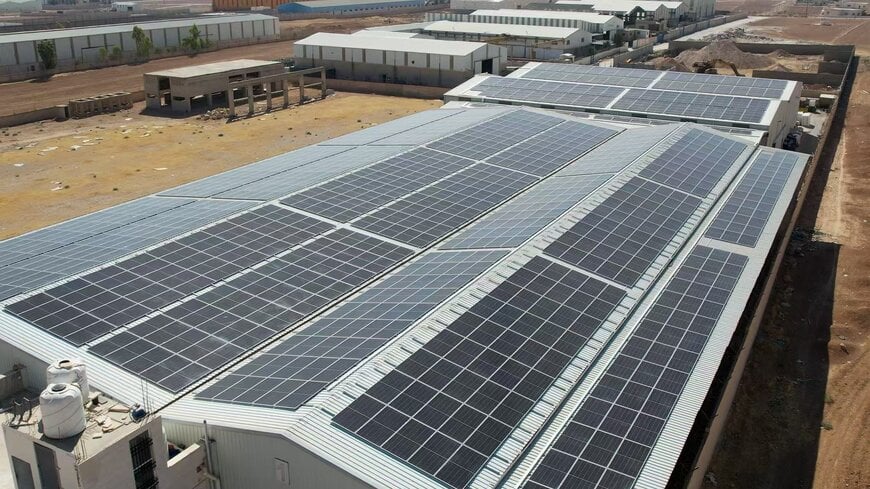
LONGi has delivered its latest-generation solar installation at a factory in Jordan. Photo source: LONGi
Manufacturing segments best suited for solar power adoption
Any industry segment can use solar power as an alternative, renewable source of clean energy. In fact technology giants like Google, Apple and Tesla, among others, use renewable energy for their operations even if it is not 100% generated by solar power. In the manufacturing segment, solar power typically suits energy intensive industries, especially those with unobstructed roof areas. Automation majors like Siemens and ABB use solar energy in their own manufacturing facilities extensively keeping with the company’s net-zero commitment. According to current trends, the following manufacturing segments are at the forefront of solar adoption:
At a time when the manufacturing industry is facing multiple challenges ranging from rising energy costs to battling environmental issues, solar power offers a very good alternative as a source of clean energy. Conventional energy sources like coal fired power plants and captive power plants powered by fossil fuels are not only seen as highly polluting, but are also dependent resources that are rapidly depleting, and the exploitation of which is environmentally degrading. What began as a supplementary source of energy has now become mainstream as solar power is gaining popular acceptance.
The case for solar adoption
According to the US Energy Information Administration, a publicly funded organisation providing independent statistics and analysis to the American people, manufacturing industries account for approximately 33% of global electricity consumption. Manufacturing is highly energy-intensive, a major cost component that directly impacts profitability. This is especially true for areas that have high tariffs for industry besides unreliable grid connectivity.
Solar power in such a scenario not only makes perfect sense as a source of clean and green alternative power source, but has today become highly cost-effective. Thanks to their growing popularity, the cost of solar photovoltaic modules have witnessed a sharp decline in recent years with economies of scale kicking in. As a result, a wide range of industries across size and scale, have started adopting solar power as an option to supplement regular grid supply.
Another factor is the net-zero target – the commitment by countries, and corporations to balance the amount of greenhouse gas (GHG) emissions with an equivalent amount removed, thus achieving a net result of zero emissions. This is in line with the Paris Agreement – ratified by 195 countries globally as on date – which requires manufacturing companies to accelerate decarbonisation, shifting from voluntary sustainability to mandatory, transparent emissions reductions to meet the net-zero targets. Adopting solar power is thus the need of the hour.
The feasibility of solar power
While solar power has been in commercial use for several years now, for manufacturing industries, there are a host of factors that come into consideration before implementation. These are summed up briefly in the following paragraphs.
First and foremost is space – solar panels need space for installation – expansive surface area for the panels. Ground-mounted or rooftop are the two common methods. Even if the plant does not have unused land in its surroundings, rooftops are ideal for installation.
The second important consideration is usage pattern. Industries that operate in daylight hours have a natural advantage, aligning with solar power generation with minimum reliance on storage, or the dependency on grid connectivity for import.
The third, and a critical factor, is grid connectivity and net metering regulations of the utility. It is important to understand beforehand if utilities are restricting, capping, or reducing compensation for excess power fed back into the grid, which reduces the economic benefit for solar owners. Solar power is capital-intensive, even as the RoI is attractive, and often inconsistent policies and regulatory delays discourage adoption.
Finally, there is the appropriate financial model to choose – whether to go for outright ownership or prefer options such as Power Purchase Agreements (PPAs), leasing, and third-party ownership models, which lower the entry barriers. This way manufacturers can adopt solar without significant upfront capital expenditure, paying only for the energy consumed.
Siemens Mobility’s range of solar installations at its Goole Rail Village, Yorkshire – UK. Photo source: Siemens Mobility
The many advantages of solar
Integrating solar power in their energy mix brings many advantages to manufacturing industries that go beyond the conventional Environmental, Social, and Governance (ESG) metrics. These include:
1. Cost savings and energy security: Solar power offers predictable energy costs over the long term, protecting manufacturers from routine tariff hikes and fuel price fluctuations. Once installed, solar systems have low operating costs and can generate electricity for 20-25 years.
2. Sustainability and carbon reduction: Solar energy is clean and non-polluting, which significantly reduces greenhouse gas emissions. For manufacturers aiming to achieve net-zero targets, solar installations provide a tangible and measurable contribution.
3. Improved brand value and market advantage: Sustainability is increasingly influencing purchasing decisions. Solar adoption improves a company’s ESG rating and enhances brand image and appeal to environmentally conscious customers and global partners.
4. Operational reliability: Used in combination with energy storage and/or hybrid systems, solar power can enhance energy reliability, reducing downtime caused by grid outages. This is an important factor in maintaining production continuity.
5. Regulatory compliance and incentives: Across the world, governments today are promoting renewable energy adoption through a mix of subsidies, tax incentives, and favourable policies. Early adopters can leverage these benefits to improve project economics.
Challenges and limitations
Despite its advantages, solar power adoption in manufacturing is not without challenges. These include:
1. Intermittency and storage needs: By its very nature, solar generation is intermittent, dependent as it is on the availability of sunlight. For industries with round-the-clock operations, this necessitates energy storage solutions or hybrid systems, which can increase costs.
2. High initial investment: While costs have decreased, the upfront investment for solar installations can still be significant, especially for large-scale systems. Although financing options exist, they may not suit all businesses, especially the small enterprises.
3. Space constraints in urban facilities: Manufacturing units located in dense urban areas may face limitations in rooftop space or structural capacity, restricting the scale of solar deployment. With high property prices, acquiring additional space is not feasible.
4. Regulatory and policy uncertainty: Frequent changes in policies related to tariffs, net metering, and open access can impact project viability. Manufacturers must navigate a complex regulatory landscape that varies by region, which is a significant risk.
5. Maintenance and performance issues: Although solar systems are relatively low-maintenance, factors such as dust accumulation, shading, and equipment degradation can affect performance. Regular monitoring and maintenance are essential to ensure optimal output.
Integrating solar with industrial systems
The true value of harnessing solar power for industrial applications does not end with the installation of solar panels on the rooftop or on ground. In fact that is just the first step. To unlock the true potential, the clean electricity thus generated must be integrated intelligently with industrial operations. This can be achieved by using advanced energy management systems to optimise the use of solar energy in real time, aligning generation with consumption patterns.
Digital technologies such as IoT, AI, and data analytics play a crucial role here. By analysing energy usage and forecasting solar generation, manufacturers can make informed decisions on load scheduling, storage utilisation, and grid interaction. For example, non-critical processes can be scheduled during peak solar generation hours, maximising the use of clean energy.
Hybrid systems that combine solar with other renewable sources, diesel generators, or grid power offer flexibility and reliability. Battery storage, although still evolving in terms of cost and efficiency, is becoming an increasingly viable option for smoothing out energy supply.
LONGi has delivered its latest-generation solar installation at a factory in Jordan. Photo source: LONGi
Manufacturing segments best suited for solar power adoption
Any industry segment can use solar power as an alternative, renewable source of clean energy. In fact technology giants like Google, Apple and Tesla, among others, use renewable energy for their operations even if it is not 100% generated by solar power. In the manufacturing segment, solar power typically suits energy intensive industries, especially those with unobstructed roof areas. Automation majors like Siemens and ABB use solar energy in their own manufacturing facilities extensively keeping with the company’s net-zero commitment. According to current trends, the following manufacturing segments are at the forefront of solar adoption:
- Textiles and apparel
- Food processing and dairy
- Automobile and electronics
- Chemicals and pharmaceuticals
- Cement and steel, and
- Logistics and warehousing.
Apart from solar PV panels that generate electricity, there are solar thermal technologies that can complement PV systems by providing process heat for applications such as drying, heating, and sterilisation, for use in certain industries, food processing and chemicals.
Leading players in the field
Selecting solar panels for manufacturing applications requires prioritising reliability, high efficiency, long-term performance, and strong global service support. Industrial users typically favour Tier-1 manufacturers with proven bankability, large-scale deployment experience, and robust warranties. The following list offers a structured overview of leading global solar panel manufacturers well-suited for industrial and manufacturing use:
Leading players in the field
Selecting solar panels for manufacturing applications requires prioritising reliability, high efficiency, long-term performance, and strong global service support. Industrial users typically favour Tier-1 manufacturers with proven bankability, large-scale deployment experience, and robust warranties. The following list offers a structured overview of leading global solar panel manufacturers well-suited for industrial and manufacturing use:
- LONGi Green Energy Technology, China – A global leader in monocrystalline PV modules, known for high efficiency and cost competitiveness. Widely used in large industrial and utility-scale projects.
- JinkoSolar, China – Among the world’s largest module producers, offering high-performance modules (including N-type TOPCon technology) suitable for industrial rooftops and ground-mounted systems.
- Trina Solar, China – Strong presence in both utility and commercial-industrial segments. Known for reliability and integrated smart energy solutions.
- JA Solar, China – Offers high-efficiency modules with strong global deployment and consistent performance in diverse climates.
- Canadian Solar, Canada – A globally recognised brand with a broad portfolio, including modules and energy solutions tailored for industrial users.
- Maxeon Solar Technologies, Singapore (formerly SunPower’s manufacturing arm) – Known for industry-leading efficiency and durability. Ideal for space-constrained industrial rooftops.
- REC Group, Norway – Premium European brand offering high-performance panels with strong quality assurance and sustainability credentials.
- Panasonic, Japan – Offers high-efficiency heterojunction (HJT) technology with excellent temperature performance – beneficial for hot industrial environments.
- First Solar, USA – Specialises in cadmium telluride (CdTe) thin-film modules. Particularly suitable for large industrial campuses in high-temperature regions due to superior heat tolerance.
- Hanwha Q CELLS, South Korea – Strong R&D capabilities and high-quality modules with advanced cell technologies (Q.ANTUM).
- Tata Power Solar, India – One of India’s most established solar brands, offering reliable modules and EPC services for industrial clients.
- Adani Solar, India – Integrated manufacturing with a strong presence in large-scale and industrial solar projects in India.
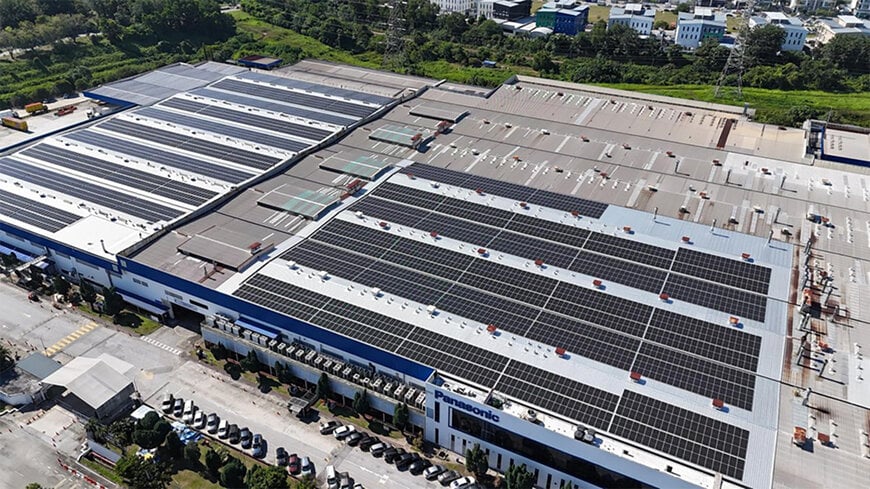
Panasonic’s solar power generation at its appliances plant in Malaysia. Photo source: Panasonic Media.
The road ahead
As more and more industries opt for alternative sources of clean energy, the future of solar power in manufacturing looks promising indeed. While solar power is not a new concept and has been around for decades, a combination of technological advancements, policy support, growing sustainability commitments, and above all, economies of scale has made adoption easier.
Continued innovation in PV technology is leading to higher efficiency modules and lower costs. Emerging solutions such as bifacial panels and perovskite cells hold the potential to further enhance performance. As battery technologies mature, the integration of storage with solar systems will become more affordable, addressing the challenge of intermittency and enabling round-the-clock renewable energy usage.
The convergence of renewable energy with digital technologies will transform how manufacturers manage energy. Smart grids, predictive analytics, and automated control systems will enable seamless integration of solar power into industrial operations. The trend toward decentralized energy generation will empower manufacturers to become energy producers as well as consumers. Microgrids and peer-to-peer energy trading could redefine the industrial energy landscape.
Conclusion
Solar power is no longer a peripheral option for manufacturing industries – it is becoming a strategic imperative. By addressing both economic and environmental challenges, solar energy offers a compelling value proposition that aligns with the evolving priorities of the industrial sector.
While challenges remain, particularly around intermittency, financing, and regulatory complexity, the trajectory is clear. With the right combination of technology, policy support, and strategic planning, solar power can play a transformative role in shaping a more sustainable, resilient, and competitive manufacturing ecosystem.
For manufacturers willing to embrace this transition, the rewards extend beyond cost savings to include enhanced reputation, regulatory compliance, and long-term operational stability. In the journey toward cleaner and smarter industry, solar power is set to be a cornerstone of progress.
Article contributed by Milton D’Silva, a freelance technical writer, and former editor of Industrial Products Finder, India.
As more and more industries opt for alternative sources of clean energy, the future of solar power in manufacturing looks promising indeed. While solar power is not a new concept and has been around for decades, a combination of technological advancements, policy support, growing sustainability commitments, and above all, economies of scale has made adoption easier.
Continued innovation in PV technology is leading to higher efficiency modules and lower costs. Emerging solutions such as bifacial panels and perovskite cells hold the potential to further enhance performance. As battery technologies mature, the integration of storage with solar systems will become more affordable, addressing the challenge of intermittency and enabling round-the-clock renewable energy usage.
The convergence of renewable energy with digital technologies will transform how manufacturers manage energy. Smart grids, predictive analytics, and automated control systems will enable seamless integration of solar power into industrial operations. The trend toward decentralized energy generation will empower manufacturers to become energy producers as well as consumers. Microgrids and peer-to-peer energy trading could redefine the industrial energy landscape.
Conclusion
Solar power is no longer a peripheral option for manufacturing industries – it is becoming a strategic imperative. By addressing both economic and environmental challenges, solar energy offers a compelling value proposition that aligns with the evolving priorities of the industrial sector.
While challenges remain, particularly around intermittency, financing, and regulatory complexity, the trajectory is clear. With the right combination of technology, policy support, and strategic planning, solar power can play a transformative role in shaping a more sustainable, resilient, and competitive manufacturing ecosystem.
For manufacturers willing to embrace this transition, the rewards extend beyond cost savings to include enhanced reputation, regulatory compliance, and long-term operational stability. In the journey toward cleaner and smarter industry, solar power is set to be a cornerstone of progress.
Article contributed by Milton D’Silva, a freelance technical writer, and former editor of Industrial Products Finder, India.
