
A Prescriptive Path for Thermal Fire Detection
Thermal imaging has been able to pick up a developing fire for years. What it lacked was a listing.
www.flir.com
Ask a fire protection engineer why thermal imaging doesn't appear on more of their drawings and the answer usually has nothing to do with the technology. The code has been moving. The 2025 edition of NFPA 72, the National Fire Alarm and Signaling Code, added a dedicated section for thermal image fire detection at Sec. 17.12, treating thermal image fire detectors as fire alarm initiating devices in their own right and requiring them to be listed for the purpose. That was a significant step, and the industry noticed it.
But code recognition and a listed product category are two different things, and the difference has always landed on the designer's desk. Without a listing, specifying thermal detection meant building a performance-based case from the ground up: design objectives, hazard analysis, modeling, and a submission the authority having jurisdiction (AHJ) evaluates on its own merits with little precedent to draw on. Every project started over. Every approval was a judgment call. Firms that have had one plan review come back rejected are not quick to volunteer for a second.
ANSI/CAN/UL 2684 closes the other half of the gap. Its first edition, dated June 2024, sets out test and performance requirements for video and thermal image detectors used in fire alarm systems — the independent benchmark thermal image fire detection had been missing for most of its time on the market.
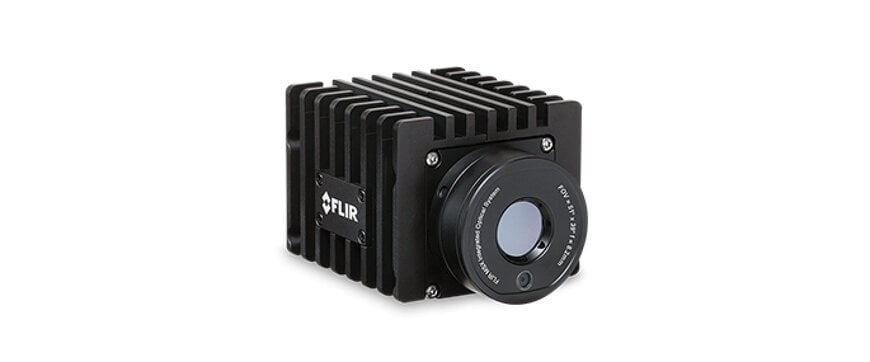
Teledyne FLIR's Axx-Series cameras are the first thermal imagers listed to it.
What changes at submission
The AHJ still has the final say. That doesn't change, and nobody working in this industry would want it to. What changes is what the AHJ is being handed.
Where the only route was a performance-based justification built for one project, there is now a prescriptive one: a code-recognized detector, evaluated by an accredited third-party laboratory against a consensus standard. For a design firm that means a repeatable starting point instead of a fresh argument every time. How far it shortens approvals will vary by jurisdiction, and it will take a few design cycles before anyone can say with confidence. But the review starts from a published benchmark.
There is a knock-on effect for integrators. Early fire detection has been a specialty sale, requiring a consultant on almost every job to get it through review. That barrier is what has kept it out of ordinary fire alarm procurement. With a listed detector, it can start to move into standard fire alarm submittals.
The detection window
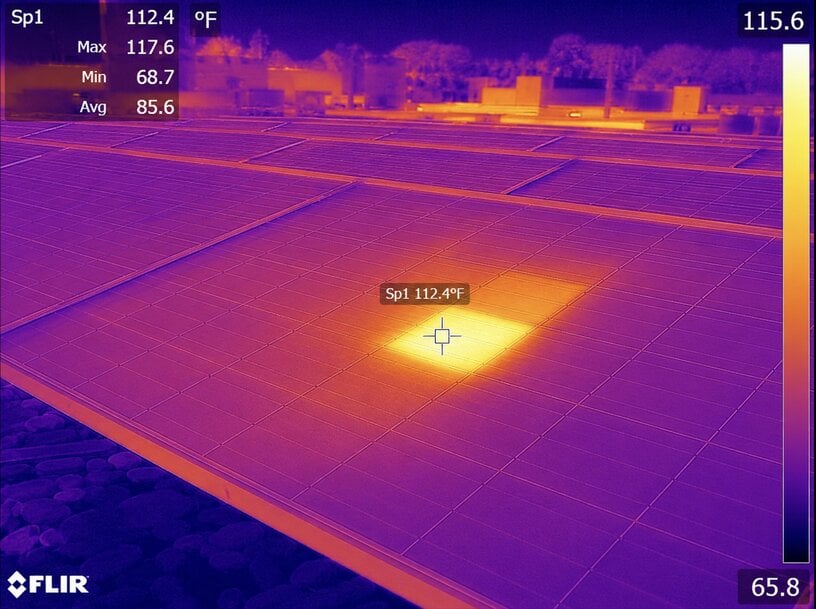
Fire does not usually announce itself; it builds. A high-resistance connection in a motor control center will run warm for hours before anything scorches. Switchgear develops a thermal signature well ahead of any arc event. Conventional detection responds to the products of combustion: smoke, flame, or heat reaching a detector. By then a fire process is already under way.
Radiometric thermal imaging responds to the heat that precedes them. Teledyne FLIR Early Fire Detection (EFD) solutions, built on the UL 2684-listed FLIR A40, A50 and A70 (Axx-Series) thermal cameras, measure the temperature of every pixel in the scene, many times a second, across defined regions of interest. Alarms can be set on absolute temperature thresholds, on the difference between regions, and on rate of rise — so the system responds to how heat is behaving and not only to how hot something is.
That last point is what separates a useful alarm from a nuisance one. Equipment that has always run warm is not a fire condition. The same equipment climbing steadily across a shift is.
How much warning that buys depends on the failure. A deep-seated fire in stored material can develop over hours. Thermal runaway in a battery cell moves faster once it starts, though the heating ahead of it is usually visible earlier. In many cases that is enough time to get someone to the equipment.
Where it belongs in a design
This is not a substitute for area smoke detection, and it should not be specified as one. Thermal imaging is line-of-sight — it covers what the camera covers. That makes it a tool for defined risk zones, from a confined switchgear room to a wide-area storage bay, with the optic matched to the space.
Specified that way, it brings something conventional detection cannot. Where the cameras are fitted with the integrated visible camera, detection stays thermal while the visible image provides verification, so an alarm arrives with thermal and visible video of the scene at the moment it triggered. That is the difference between dispatching on an event and dispatching on a suspicion.
The part owners care about
Design engineers rarely have to make the financial case themselves, but it helps to know it exists. Property underwriters build their loss estimates around how quickly a fire is found and controlled, and detection timing sits directly upstream of those numbers. Teledyne FLIR estimates the asset-to-risk ratio at roughly $100 of protected value, downtime and replacement cost for every $1 spent on thermal detection.
That is the kind of argument an owner's insurer understands. It tends to make specification conversations shorter.
"We've had customers running this for years, and the feedback was always the same. They believed in the capability; getting it through plan review was the hard part. That's what the listing changes. Engineers and AHJs have a benchmark to work from rather than assessing each project from scratch," says Matthew Hasty, Global Vertical Director for Science, Automation, and Early Fire Detection at Teledyne FLIR.
The code recognized the device type in its 2025 edition. A product is now listed to the standard behind it. Whether that changes specification practice at scale is a question the next few design cycles will answer — but for the first time, the question is about adoption rather than about whether the technology can be approved at all.
