
www.magazine-industry-usa.com
11
'26
Written on Modified on
Power Grid Training and Renewable Integration Network
Siemens and Swinburne University deploy the International Energy Transition Alliance to deliver grid software engineering and power systems training across Asia.
www.siemens.com
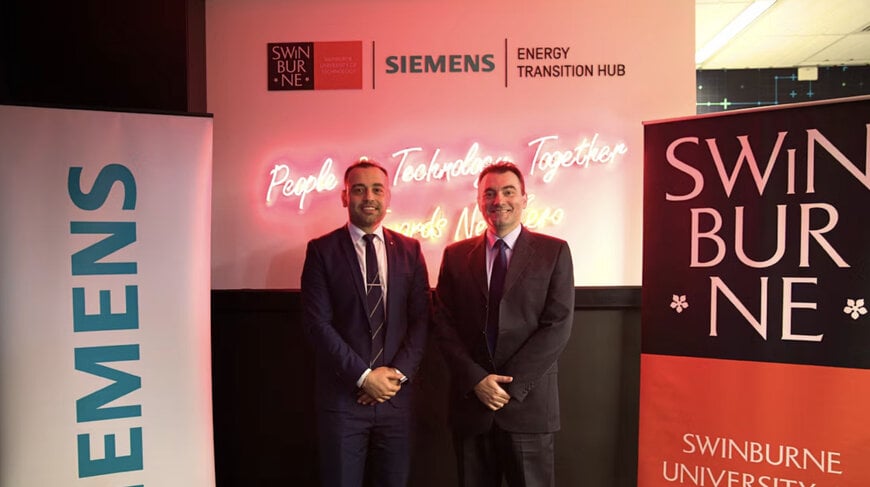
Siemens and Swinburne University of Technology have expanded their power systems partnership internationally by forming the Siemens Swinburne International Energy Transition Alliance for Industry Training and Innovation. The initiative establishes a cross-border engineering network focused on modern power systems, digital energy infrastructure, and grid stability for the energy sector across the Asia-Pacific region.
Industrial Challenge and Regional Infrastructure Needs
Variable renewable generation requires modernized grid management architectures and specialized operational engineering skills. Grid operators face technical challenges regarding frequency regulation, intermittent power inputs, and decentralized network stability. Addressing these vulnerabilities requires engineers trained in advanced digital grid software, load forecasting algorithms, and modern system architectures capable of managing complex bi-directional energy flows.
Technical Platform and Partner Specialization
The initiative functions as a coordinated international network originating from the 5.2 million Australian dollar Siemens Swinburne Energy Transition Hub in Melbourne, Australia. Siemens contributes digital energy technology, industrial grid software suites, and power systems engineering architectures. Swinburne University of Technology provides academic curriculum design, applied research frameworks, and instructional oversight.
Beyond foundational instruction in renewable energy integration, the platform conducts technical research into artificial intelligence applications for decarbonization targets and quantum timing architectures designed to synchronize and reinforce power grid stability.
Deployment and Operational Model
The cooperative framework establishes distributed technical nodes rather than independent physical facilities. Central program management and curriculum development remain anchored at the Melbourne facility, while regional nodes execute applied training in collaboration with local academic and industrial institutions.
The first international implementation phase establishes an energy node in Malaysia by late 2026. This node operates as an integrated extension of the central hub, allowing regional power sector personnel to access simulation tools, grid modeling environments, and operational methodologies tailored to local transmission and distribution constraints.
Operational Impact and System Reliability
The alliance delivers standardized engineering methodologies to technical workforces, improving operational resilience across regional transmission and distribution networks. Access to digital grid software and structured training pipelines enables regional utilities to model power fluctuations, optimize grid load management, and mitigate transmission failure risks during renewable onboarding.
Regarding the technical demands of contemporary distribution systems, Associate Professor Mehdi Seyedmahmoudian, director of the Siemens Swinburne Energy Transition Hub, stated: "Through this Alliance, we are creating a connected network of international partners to equip energy professionals across Asia-Pacific with the skills and technologies needed for the energy transition. The energy transition is about more than producing renewable electricity. It is also about giving people the skills and tools to keep an increasingly complex energy system secure, reliable and resilient."
Edited by Sucithra Mani, Induportals editor – adapted by AI.
www.siemens.com
