
Independent Studies Strengthen the Evidence for Quantitative Optical Gas Imaging
Independent research demonstrates QOGI’s ability to detect and quantify fugitive hydrocarbon emissions in controlled and real-world conditions.
www.flir.com
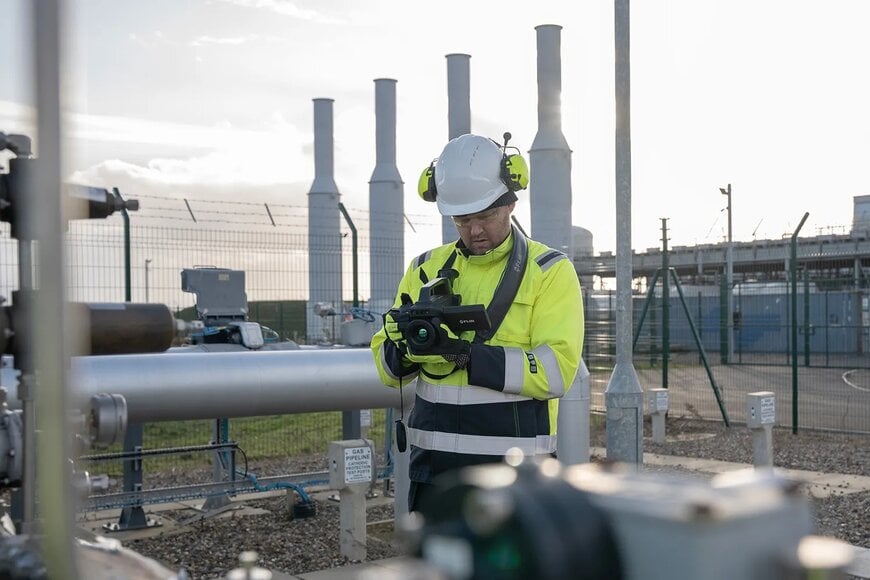
Quantitative Optical Gas Imaging (QOGI) has progressed from a promising innovation to a proven field technology, supported by a series of independent, peer-reviewed and industry-sponsored studies.
The studies cover controlled laboratory releases, blind field trials and real-world oil and gas operations. Together, they demonstrate QOGI’s ability to detect and quantify fugitive hydrocarbon emissions, while also highlighting the importance of proper setup, environmental awareness and operator training.
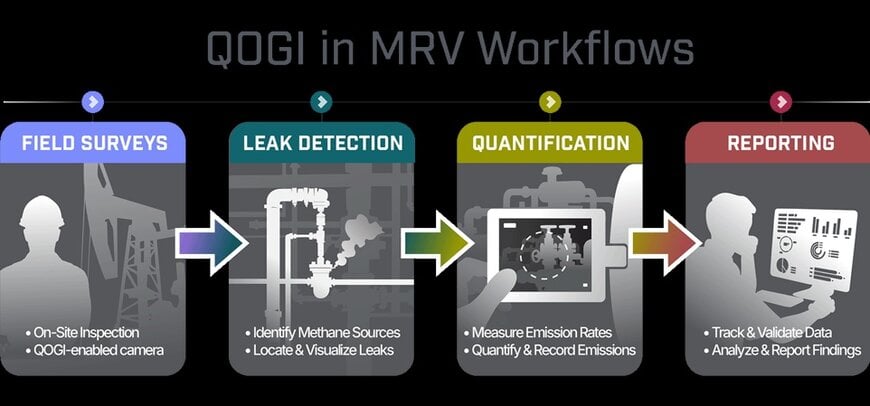
For operators looking to strengthen Leak Detection and Repair (LDAR), Measurement, Reporting and Verification (MRV) and compliance workflows, the findings provide valuable insight into how QOGI performs under different conditions.
Benchmarking QOGI against Method 21
One of the key studies, sponsored by Concawe and conducted at VITO in Belgium, compared an early QOGI system directly with Method 21 using 61 controlled hydrocarbon releases.
QOGI detected 100% of the leaks, with quantification errors ranging from -23% to 69% and an average error of 6%. Method 21 showed a wider error range of -92% to 667%, with an average error of 31%.
The study concluded that QOGI provided more accurate and robust leak-rate estimates than sniffer-based quantification, particularly when there was a temperature difference of at least 5°C between the gas and the background.
The results also demonstrated robust detection and quantification across a wide emission range, supporting QOGI as a practical tool for LDAR and environmental monitoring.
It is important to note that the study evaluated an early QOGI system, with significant technological improvements made since the testing was conducted.
Testing QOGI under realistic field conditions
Laboratory testing provides one part of the picture. A separate study sponsored by the European Gas Research Group (GERG) evaluated QOGI and other methane quantification technologies under controlled outdoor conditions in Zaragoza, Spain.
The testing was conducted without operators knowing the actual leak rates. QOGI measurements were typically within a factor of three of the actual emission rates.
The study also showed that performance was influenced by release size, background and environmental conditions. Operator technique and setup were important, while averaging multiple measurements could improve accuracy.
These findings highlight the importance of understanding the conditions in which QOGI is being used and following appropriate measurement practices.
Taking QOGI into the field
The Alberta Methane Field Challenge provided another opportunity to evaluate QOGI in real-world conditions.
The large-scale field evaluation covered approximately 50 oil and gas sites and compared different methane detection and quantification technologies, with QOGI used as a baseline reference.
QOGI enabled rapid screening and facility-level emission profiling, helping support site prioritization and emissions inventory development. The study also reinforced its value as a first-pass screening tool within integrated MRV workflows.
QOGI produced an aggregate error of only 18% in the study and demonstrated its ability to provide rapid facility-level emission estimates while complementing other detection technologies.
Controlled validation at scale
A further study at METEC at Colorado State University evaluated QOGI using single-blind controlled releases designed to simulate well-pad operations, including vegetation and ambient outdoor environments.
Across 357 measurements and 26 release scenarios, 75% of QOGI quantifications were within a factor of three of the true emission rates.
The testing also identified several conditions that influenced accuracy. Performance was strongest with low wind and clear-sky backgrounds, while measurements from multiple vantage points helped reduce outliers. Higher release rates and measurement distances between 2 and 10 metres were also associated with higher accuracy and fewer outliers.
The findings reinforce that QOGI performance depends not only on the technology itself, but also on how measurements are taken and the environmental conditions at the time.
What the evidence shows
Taken together, these independent studies demonstrate that QOGI can detect and quantify methane leaks across a range of operating and environmental conditions.
The evidence shows particularly strong performance when environmental factors are understood and best practices are followed, including proper setup and trained operation.
Across a range of scenarios, QOGI has also demonstrated advantages over traditional sniffer-based methods, particularly in its ability to visualize emissions, prioritize sources and support quantification at scale.
For operators, this can provide actionable data to support LDAR programs, MRV initiatives and evolving compliance and reporting requirements.
The body of independent research provides a growing evidence base for QOGI as a reliable, field-ready solution for emissions detection and quantification.
