
www.magazine-industry-usa.com
29
'26
Written on Modified on
Hanwha Power Launches First US Gas Compressors at Ohio Plant
The company successfully commissioned three fuel gas compressors and secured a nine-year service agreement at the newly opened 950 megawatt Trumbull Energy Center.
hanwhavision.eu
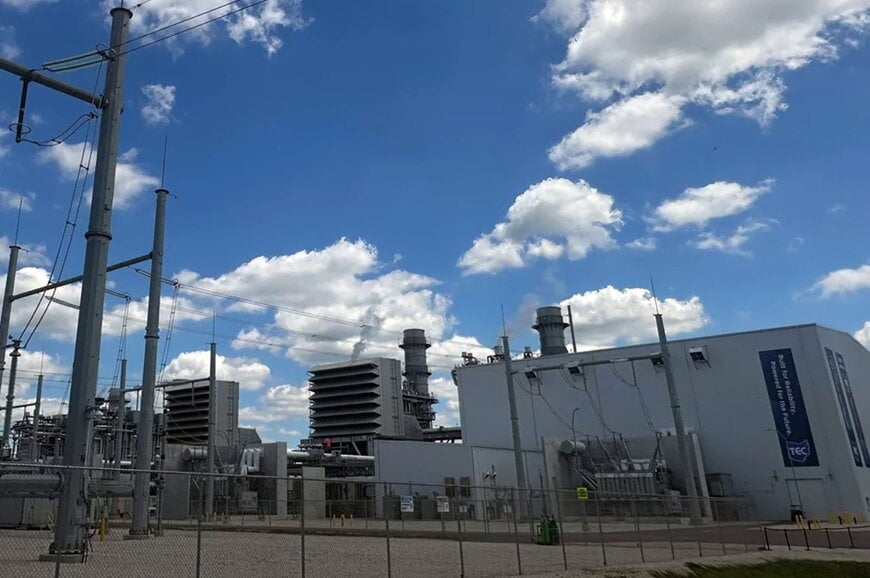
A combined cycle gas turbine power plant with a capacity of 950 megawatts has commenced commercial operations in Ohio to stabilize the regional electricity grid. The facility integrates variable frequency drive fuel gas compressors to manage fluctuating pipeline pressures within the Pennsylvania-New Jersey-Maryland Interconnection wholesale electricity market.
Project Context and Industrial Challenge
The retirement of aging coal-fired power plants across the United States requires the deployment of flexible, high-efficiency digital infrastructure to ensure continuous power generation. The Trumbull Energy Center was constructed to address this supply gap within the regional transmission network. Navigating extreme seasonal fluctuations in natural gas pipeline pressure presented a significant operational challenge, requiring localized pressure regulation to maintain turbine efficiency and process stability.
To address this complexity, asset manager Trumbull Asset Management utilized a consortium of international partners. Korea Southern Power Co., Ltd. (KOSPO) led project development, Gemma Power Systems managed engineering, procurement, and construction (EPC) duties, and Siemens Energy supplied the primary gas turbine technology. Hanwha Power provided the specialized compression systems.
Technical Solution and Operational Function
Hanwha Power delivered three fuel gas compressor units equipped with Variable Frequency Drive (VFD) technology. The VFD systems automatically adjust compressor motor speed in response to real-time pipeline pressure variations. This technical approach maintains a constant gas delivery pressure to the Siemens gas turbines, preventing operational interruptions and maintaining thermal efficiency.
The integration required strict alignment with the power plant's automated control architecture. By regulating throughput via electronic speed control rather than mechanical throttling, the VFD systems reduce mechanical wear and lower parasite energy consumption under partial-load conditions.
Lifecycle Management and Service Infrastructure
The operational framework includes a nine-year Long-Term Service Agreement (LTSA) between the plant operators and Hanwha Power. This contract covers capital spare parts and technical maintenance services spanning three complete overhaul cycles.
Engineering support and component refurbishment will be centralized at Hanwha Power’s service center in Houston, Texas. This localized infrastructure ensures the availability of specialized technicians and rapid deployment of replacement parts, directly supporting the long-term maintainability of the plant's fuel supply system.
Grid Impact and Applications
The 950 MW facility serves as a baseload and load-following asset within the PJM Interconnection grid. The automated compression solution allows the plant to respond safely to fluctuating electrical demands while transitioning away from high-emission solid fuels. The project establishes a technical benchmark for incorporating foreign power generation components and long-term service agreements into North American utility infrastructure.
Edited by Evgeny Churilov, Induportals Media - Adapted by AI.
www.hanwha.com
