
www.magazine-industry-usa.com
05
'26
Written on Modified on
Polyurethane and Polyamide Industrial Guide Roller Series
norelem introduces a portfolio of trackless guide rollers designed for precision routing in high-frequency industrial automation and logistics systems.
norelem.se
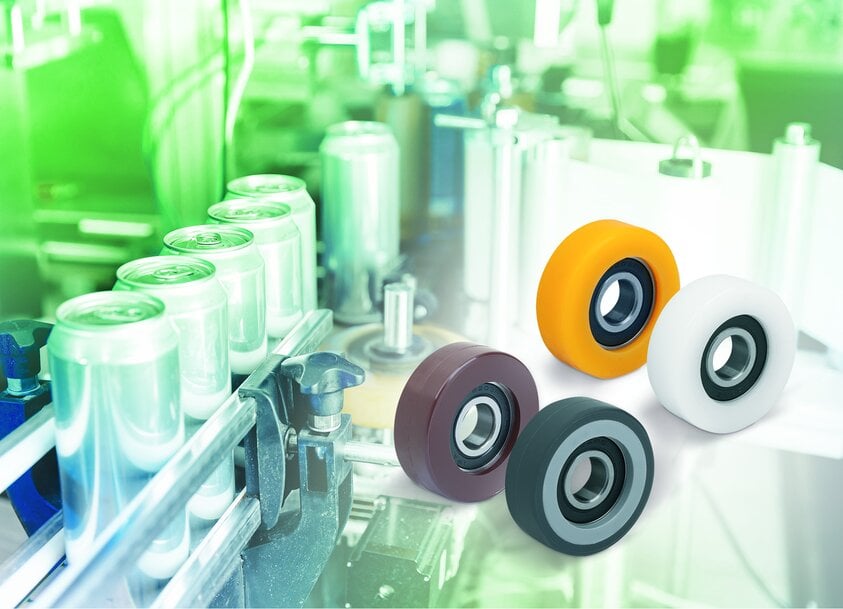
In automated logistics and heavy machinery, continuous linear routing requires robust guiding mechanisms capable of withstanding repetitive mechanical stress. To address this structural requirement, norelem has developed a comprehensive range of guide rollers featuring specialized polyurethane and polyamide treads designed for high-frequency industrial and outdoor infrastructure.
Engineering Context
High-frequency material handling systems, such as airport sorting facilities and continuous industrial conveyors, subject mechanical guides to intense, short-term dynamic loads. Without highly resilient tracking components, these continuous processes risk mechanical wear, track deviation, and unplanned structural downtime. Selecting the appropriate tread material and hardness is therefore critical for mechanical engineers to balance load capacity, rolling resistance, and floor preservation within specific environmental and spatial constraints.
Technical Explanation
The guide roller architecture utilizes two primary structural compounds: thermoplastic polyurethane (TPU) and high-strength polyamide. The polyurethane variants, formulated with shore hardnesses ranging from 92 to 98 Shore A, provide elastic deformation that absorbs shock while maintaining a low rolling resistance. For extreme load-bearing requirements, the polyamide series offers a rigid 70 Shore D hardness, ensuring maximum structural integrity without compromising travel speed. The rollers are mechanically engineered to be trackless and non-staining, preventing surface contamination during continuous operation across smooth industrial surfaces.
Product Relevance
The material specificity of these guide rollers allows engineers to precisely match the wear, chemical exposure, and spatial limitations of their mechanical designs. The compact TPU variants enable integration into restricted build spaces without sacrificing abrasion resistance, while the hydrolysis-resistant models ensure longevity in exposed, weather-dependent applications. By optimizing the rolling interface, these components reduce maintenance intervals, decrease drive energy requirements, and extend the overall operational lifespan of the guided equipment.
Real-World Applications
This guide roller ecosystem is deployed across a broad spectrum of industrial and commercial infrastructure. The variants are distinguished by specific material formulations and color-coding to suit diverse operational demands:
- Light Brown Series: Features an Extrathane tread with a 92 Shore A hardness, offering high elasticity and noise dampening for passenger elevators, gate guides, and automated pool covers.
- Brown Series: Utilizes a 98 Shore A thermoplastic polyurethane (TPU) construction, providing a compact diameter and high chemical resistance ideal for restricted spaces in conveyor belts and convertible roofs.
- Silver-Grey Series: Combines a TPU tread with a polyamide core at 92 Shore A hardness, ensuring hydrolysis and abrasion resistance for outdoor environments such as offshore cranes.
- Natural White Series: Manufactured from break-resistant polyamide with a rigid 70 Shore D hardness, delivering extremely high load capacity for heavy-duty elevators and high-load gate guides.
Additional Context
This section details technical specifications and competitive benchmarking not included in the original product announcement.
Within the industrial material handling sector, the transition from traditional steel or standard rubber rollers to advanced composite materials is driven by the engineering need for superior strength-to-weight ratios and reduced operational noise. The global market increasingly favors advanced polymers like polyurethane and polyamide due to their high resistance to corrosive chemicals and lower inertia, which directly reduces the electrical consumption of automated drive systems. Compared to conventional vulcanized solid rubber alternatives, norelem's TPU and Extrathane formulations eliminate the risk of contact discoloration while significantly increasing cut and tear resistance. Furthermore, the integration of precision ball bearings ensures that these advanced polymer treads maintain their low friction coefficients even in manufacturing environments with high particulate contamination.
Edited by Maria Brueva, Induportals editor – adapted by AI.
www.norelem.com
This section details technical specifications and competitive benchmarking not included in the original product announcement.
Within the industrial material handling sector, the transition from traditional steel or standard rubber rollers to advanced composite materials is driven by the engineering need for superior strength-to-weight ratios and reduced operational noise. The global market increasingly favors advanced polymers like polyurethane and polyamide due to their high resistance to corrosive chemicals and lower inertia, which directly reduces the electrical consumption of automated drive systems. Compared to conventional vulcanized solid rubber alternatives, norelem's TPU and Extrathane formulations eliminate the risk of contact discoloration while significantly increasing cut and tear resistance. Furthermore, the integration of precision ball bearings ensures that these advanced polymer treads maintain their low friction coefficients even in manufacturing environments with high particulate contamination.
Edited by Maria Brueva, Induportals editor – adapted by AI.
www.norelem.com
