
www.magazine-industry-usa.com
09
'26
Written on Modified on
Deployment of Full-Stack Computing Architectures in Autonomous Heavy Machinery & Power Infrastructure
NVIDIA & Doosan Group establish a strategic engineering initiative to deploy physical intelligence models across production automation networks and the automotive data ecosystem.
www.nvidia.com
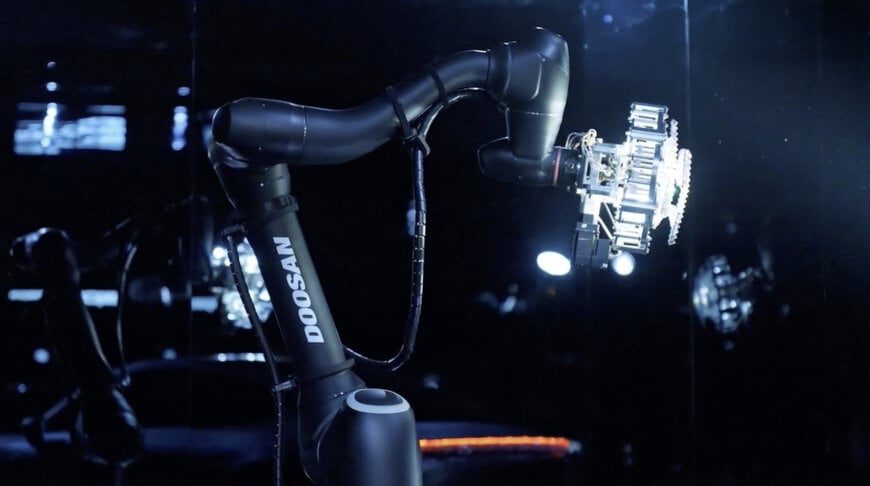
The formation of a multi-industrial technology collaboration between Doosan Group and NVIDIA introduces a comprehensive deployment of accelerated computing platforms within physical manufacturing environments. The engineering initiative spans robotic automation, heavy construction machinery, large-scale power infrastructure, and advanced electronics materials, establishing a unified hardware and software framework for next-generation data center systems.
Accelerated Simulation-to-Real Workflows and Autonomous Mechanical Control
Implementing physical artificial intelligence within industrial environments requires the synchronization of real-world mechanical perception with dense computational reasoning models. To prevent latency bottlenecks within the digital supply chain, heavy machinery and automated systems must process ambient variables locally while relying on highly calibrated virtual environments for task learning. The integration utilizes specialized robotics frameworks—specifically Isaac Sim and Isaac Lab—alongside Cosmos world foundation models to establish autonomous operating parameters. By deploying the open-source Newton physics engine alongside Jetson Thor computing modules, the system builds an internal operating architecture capable of processing real-time perception, structural simulation, and on-device inference simultaneously.
This mechanical and computational alignment enables collaborative robots and heavy equipment to operate autonomously in dynamic environments without requiring manual reprograming. For heavy industrial tasks such as product depalletizing, precision sanding, and multi-axis material handling, the systems use simulation-to-real workflows where control policies are trained in physics-calibrated virtual environments before being uploaded to physical logic controllers. This computational structure allows compact autonomous equipment to perceive environmental changes, evaluate shifting floor parameters, and execute multi-plane physical adjustments across the broader automotive data ecosystem.
Electro-Thermal Substrates and Baseload Power Allocation for Accelerated Compute Clusters
The expansion of high-density processing clusters places extreme demands on the surrounding hardware manufacturing and power generation infrastructure. To sustain the continuous energy requirements of accelerated computing hubs, the framework incorporates large-scale power infrastructure portfolios, including gas turbines, steam turbines, small modular reactors, and hydrogen fuel-cell systems. This centralized energy footprint is evaluated against the specific load-profile demands of the DSX AI factory platform, matching volatile processing spikes with stable baseload power configurations to maintain continuous hardware availability.
Concurrently, high-speed electrical signaling within the physical server rack requires specialized material science solutions to maintain signal integrity across ultra-high-bandwidth pipelines. The integration utilizes advanced copper clad laminates to fabricate the printed circuit boards required for high-performance network switches, processing accelerators, and server motherboards. These low-loss laminate materials conform directly to the MGX modular reference architecture specifications, suppressing high-frequency electromagnetic interference and signal degradation as data packets transit across the dense layout of modern server architecture.
Edited by Natania Lyngdoh, Induportals editor, assisted by AI.
www.nvidia.com
