
www.magazine-industry-usa.com
15
'26
Written on Modified on
Laser-Weldable Thermoplastics for Photovoltaic Enclosures
SABIC introduces materials designed to improve PV component durability and manufacturing efficiency.
www.sabic.com
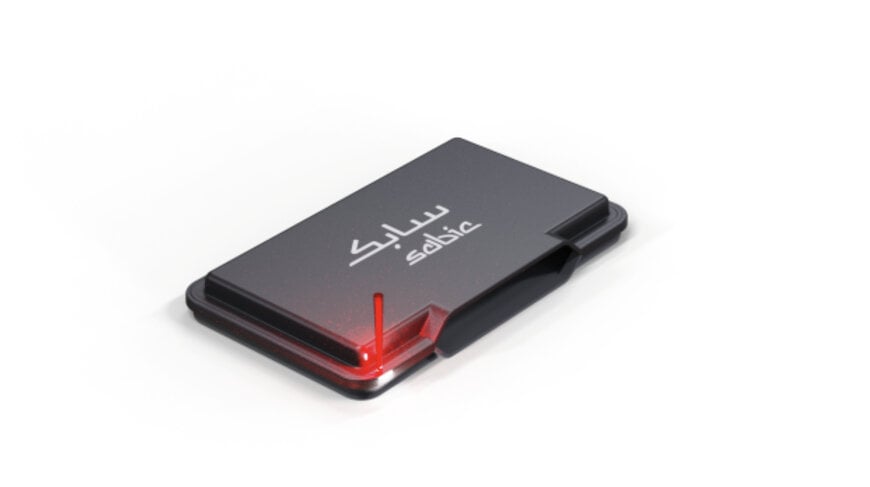
SABIC has launched NORYL V0150TW and V0150IR2 resins, described as the first laser-weldable thermoplastics developed for photovoltaic applications. The materials target solar electronics including microinverters, junction boxes and solar tracker systems, combining flame retardancy, weather resistance and laser-welding capability to support higher-volume production and long-term outdoor operation.
Technical Requirements for Photovoltaic Component Housings
Microinverters convert direct current generated by photovoltaic modules into alternating current. Because these components operate outdoors for extended periods, enclosure materials require resistance to heat, environmental exposure and ignition risk.
According to SABIC, the new resins achieve UL94 V0 flame performance at 1.0 mm and UL94 5VA at 1.5 mm thickness. The materials also carry a UL746C F1 outdoor suitability rating, maintain mechanical integrity up to 150°C and are designed for up to 15 years of outdoor service. These benchmarks are commonly used to assess flame resistance and weatherability in electrical and photovoltaic applications.
The materials are unreinforced blends of polyphenylene ether (PPE) and polystyrene (PS) formulated with non-brominated and non-chlorinated flame retardants. Published material data indicate high dimensional stability, low moisture absorption, hydrolytic stability and strong electrical performance, characteristics relevant to photovoltaic components exposed to humidity and temperature cycling.
Laser Welding as a Manufacturing Throughput Approach
The absorptive grade V0150TW and transmissive grade V0150IR2 are designed to enable laser welding between polymer components. SABIC states that transitioning from ultrasonic welding to laser welding can reduce reliance on curing-dependent bonding materials, potentially shortening assembly cycles and lowering manufacturing costs. Increased throughput may support scaling of photovoltaic component production as deployment of distributed solar systems expands.
Compared with metal enclosures, SABIC reports reductions of up to 40 percent in part size, 35 percent in weight and 30 percent in material usage. Lower mass and material consumption may influence transportation efficiency and enclosure design flexibility within photovoltaic manufacturing.
Application Areas in Solar Electronics
Beyond microinverters, the materials are intended for photovoltaic junction boxes, solar tracker boxes and solar optimizers. These applications require electrical insulation, flame resistance and resistance to prolonged environmental exposure. The products are available globally.
SABIC stated that the resin platform was developed to support mass production while meeting operational requirements for solar infrastructure. The materials received a Silver Edison Award 2026 in the high-performance polymer systems category.
Edited by Natania Lyngdoh, Induportals Editor, assisted by AI.
www.sabic.com
-2296-71282-204124.png)