
www.magazine-industry-usa.com
16
'26
Written on Modified on
Panasonic at 2026 NAB Show
From April 19 to 22, in Las Vegas, Nevada, the company will showcase its latest AI-driven video mixers and professional audio systems to enhance high-end streaming and automated broadcast workflows for global creators.
holdings.panasonic
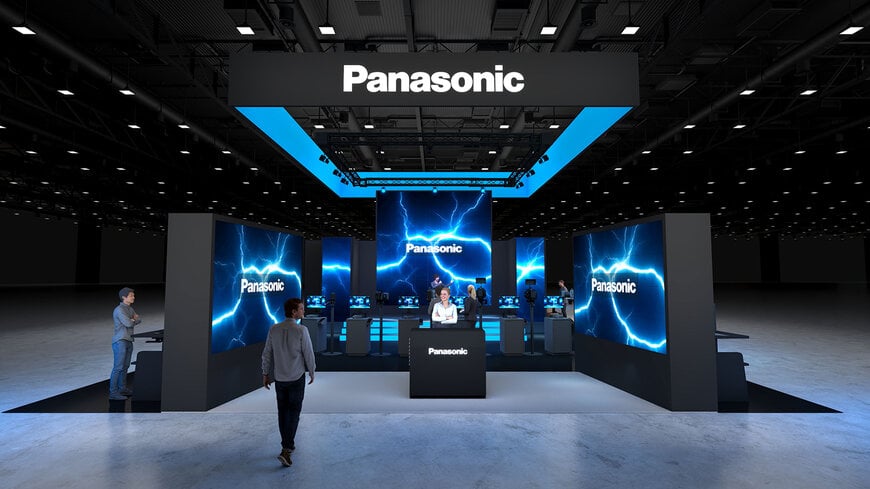
As the industry shifts toward more complex live environments, professionals are increasingly searching for solutions that offer greater flexibility than traditional hardware-bound systems. The evolution of video production technology now focuses on overcoming the limitations of standard SDI setups and rigid aspect ratios. Panasonic’s 2026 production suite differentiates itself from the competition by integrating high-speed IP workflows with hardware that allows for unprecedented customization in resolution and remote operability.
Enhancing Live Production Efficiency with Advanced Camera Integration
Modern broadcast environments require systems that can handle high-speed data without overcomplicating the physical infrastructure. Unlike standard market offerings that may require extensive cabling for high-speed shooting, the updated Camera Control Units (CCU) now support high-speed capture directly within SMPTE ST 2110 environments. This advancement simplifies the physical footprint of a live venue while maintaining broadcast-grade signal integrity.
Overcoming Aspect Ratio Limitations in Modern Displays
One of the primary challenges in live entertainment is the rise of non-standard LED displays. While many traditional switchers are confined to a standard 16:9 format, the latest IT/IP platforms like KAIROS allow producers to select any desired resolution. This software-defined architecture provides a significant advantage for events using unique LED shapes and pixel pitches, as it processes video based on the canvas size rather than fixed hardware inputs.
The Role of Software in Streamlining Remote Camera Management
The shift toward remote production has created a demand for more agile monitoring tools. New software plug-ins now allow for the status monitoring and image adjustment of up to 20 cameras simultaneously from a single mobile tablet or PC. This differs from traditional Remote Operation Panels (ROP) by removing the need for a fixed engineering desk. By decentralizing control, production teams can reduce setup times and manage complex multi-camera arrays from anywhere within the network.
Scalable Hardware for Diverse Production Needs
Versatility remains a key differentiator in a crowded market. Today's high-end PTZ cameras and compact box-style units are designed to deliver studio-quality images in a much smaller form factor than their predecessors. These units now include features such as low-skew modes and integrated auto-focus that were previously reserved for larger, more expensive studio cameras. This scalability ensures that even smaller productions can achieve the same visual fidelity as major broadcast networks.
Edited by Evgeny Churilov, Induportals Media - Adapted by AI.
www.holdings.panasonic
-2296-71282-204124.png)