
Free Modules Reduce Linear Transport Costs
Yamaha Robotics introduces LCMR200 Free Modules to simplify return line design and lower system costs while maintaining precision in automated assembly and packaging applications.
www.yamaha-motor.eu
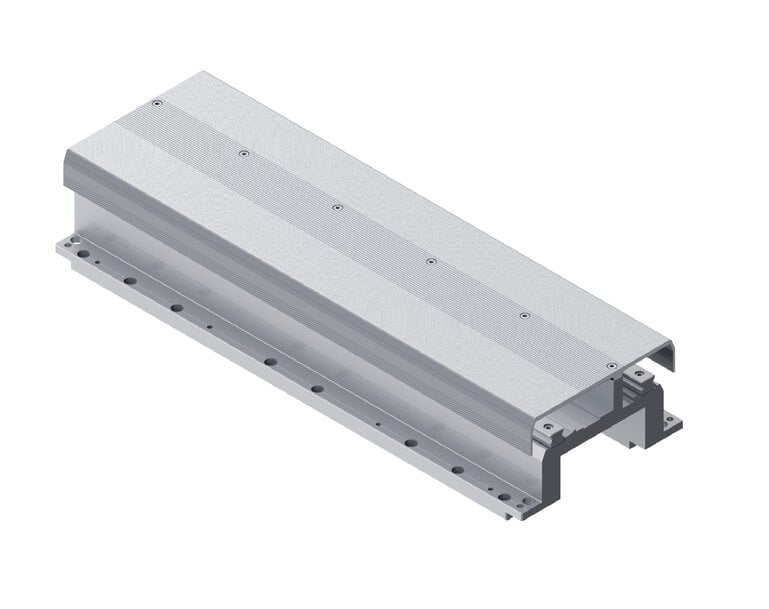
Yamaha Robotics has expanded its LCMR200 linear transfer system with Free Modules, designed to reduce system complexity and cost by eliminating integrated drive units while preserving positioning accuracy.
Context: Cost and flexibility in transfer systems
In automated assembly and packaging lines, linear transfer systems must balance precision, flexibility, and cost. While fully driven modules provide accurate positioning, they can increase system complexity and maintenance requirements, particularly in return lines or non-critical transport sections.
The introduction of Free Modules addresses these challenges by enabling more economical system configurations without compromising mechanical precision.
System architecture: Modular transport with active positioning
The LCMR200 system is based on directly driven sliders that enable programmable positioning, speed, and acceleration. Standard modules support transport speeds of up to 2500 mm/s and allow processes such as screwdriving, dispensing, push-fitting, and palletising to be performed directly on the moving platform.
The system maintains high precision, with mechanical tolerances within ±30 microns and repeatability within ±5 microns, supported by a rigid guide structure.
Free Modules: Simplified design for return lines
The new Free Modules remove the integrated drive unit and sensors, retaining only the mechanical guide frame and cover. Despite this simplification, they maintain the same dimensional tolerances and guiding precision as driven modules.
Available in stroke lengths from 200 mm to 1000 mm, Free Modules are suited for return paths or sections where active positioning is not required.
Movement is achieved באמצעות an external feed mechanism, such as Yamaha Robonity actuators, allowing system designers to optimise drive configurations according to application needs.
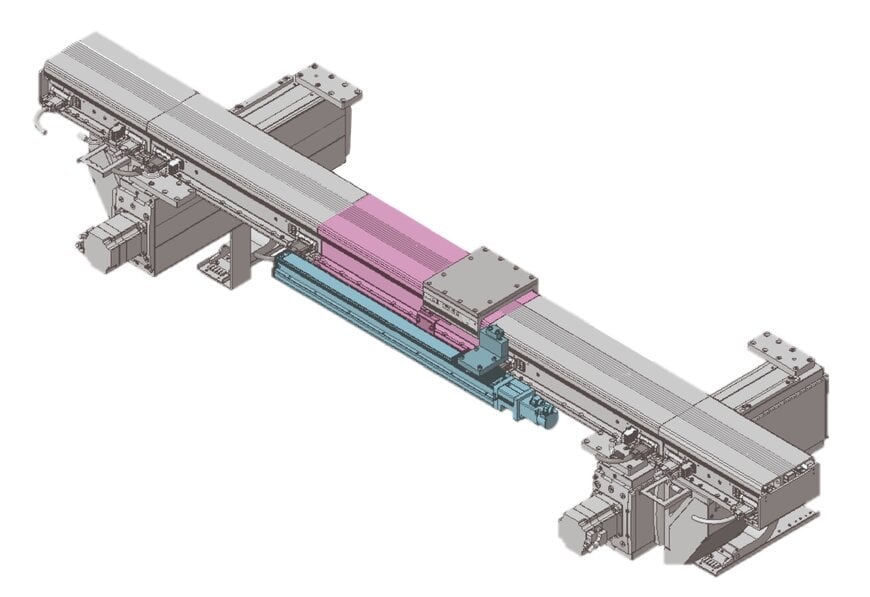
External feed mechanism is required to move the sliders
Operational benefits: Reduced cost and maintenance
By eliminating active components, Free Modules reduce system cost, energy consumption, and maintenance requirements. The absence of integrated drives also extends service life and minimises spare parts needs.
Additionally, the simplified design improves resistance to environmental factors such as heat or contamination, making the modules suitable for demanding industrial processes, including welding or heat treatment.
System integration and flexibility
Free Modules can be combined with standard LCMR200 modules, as well as horizontal and vertical circulation units and traversing modules. This modular approach allows integrators to design flexible transport systems with branching, bypassing, and sampling capabilities.
Conclusion: Optimising transport system design
With the introduction of Free Modules, Yamaha Robotics extends the flexibility of the LCMR200 platform by enabling cost-optimised system layouts. The approach allows manufacturers to tailor transport architectures to application requirements while maintaining precision and reliability in automated production environments.
Edited by an industrial journalist, Lekshman Ramdas, with AI assistance.
www.yamaha-motor.com
