
www.magazine-industry-usa.com
10
'25
Written on Modified on
AI-Based Sensor Networks for Environmental and Hydrogen Safety Monitoring
Fraunhofer IPMS develops integrated inline sensor systems to enable real-time soil, water, and hydrogen infrastructure monitoring in Lusatia’s sustainable transformation.
www.fraunhofer.de
The Fraunhofer Institute for Photonic Microsystems (IPMS) has launched the AIS-Edge Node (AIS-EN) project—Adaptive Integrated Inline Sensors for Infrastructure in the Environmental and Hydrogen Economy—together with numerous regional partners. The project aims to support structural change in Lusatia through advanced sensor technologies combined with AI-based data evaluation. The focus lies on continuous soil and water monitoring as well as on reliable safety monitoring for hydrogen infrastructure.
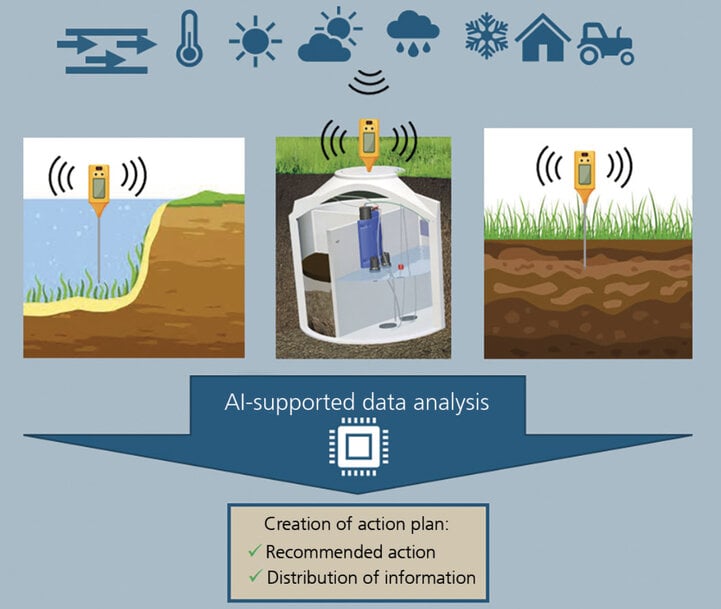
Environmental monitoring is driven by solid-state sensor systems capable of delivering reliable measurement results regardless of turbidity in soil and water. Continuous real-time data acquisition replaces the previously selective and time-delayed measurement of parameters such as pH value and pollutant concentration. AI-supported evaluation detects anomalies such as toxic discharges at an early stage, correlates them with historical and meteorological data, and derives forecasts and actionable recommendations. This enables long-term protection of groundwater quality and rapid response to environmental contamination.
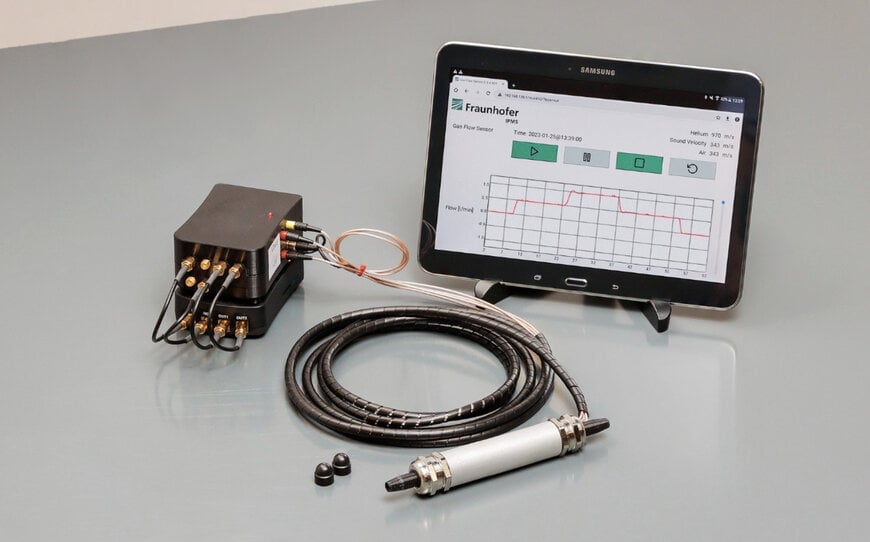
A second core application area is hydrogen safety monitoring. Based on advanced ultrasonic sensor technology, the system enables fast, continuous, and highly precise hydrogen detection across a wide concentration range from 1% to 100%. The sensors provide high temperature stability, low maintenance requirements, and do not require regular calibration. Measurement accuracy is better than two percent. In addition to monitoring explosion limits, the sensors also determine the spatial distribution of hydrogen, enabling precise localization of potential leaks. AI-supported evaluation further increases robustness, long-term stability, and detection accuracy. CMOS-compatible manufacturing allows direct integration of electronics into the sensor system.
Industrial Cooperation and Regional Technology Transfer
Fraunhofer IPMS is supported in the AIS-EN project by the regional partners LKT Lausitzer Klärtechnik GmbH, UP Umweltanalytische Produkte GmbH, PRIGNITZ Mikrosystemtechnik GmbH, Actemium BEA GmbH, and GST Gesellschaft für System- und Tankanlagentechnik mbH. More than ten additional companies and associations are involved through letters of intent, ensuring effective technology transfer and long-term strengthening of Lusatia’s innovation ecosystem.
www.ipms.fraunhofer.com
