
www.magazine-industry-usa.com
20
'26
Written on Modified on
Multi-Stage Seat Belt Load Limiter Enters Series Production
ZF LIFETEC's Multi Stage Load Limiter offers four load levels and eleven profiles to adapt restraint forces to occupant type and crash scenario.
www.zf.com
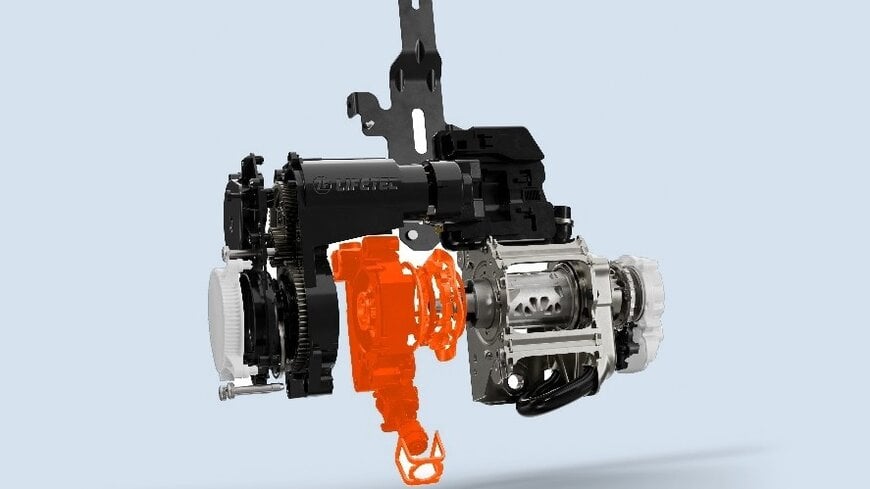
Vehicle restraint systems have traditionally been calibrated around an average occupant, even though drivers and passengers differ widely in size, weight and seating position. ZF LIFETEC has brought its Multi Stage Load Limiter (MSLL) into series production, giving vehicle manufacturers a seat belt load limitation system with four load levels and eleven load profiles for passenger car occupant protection. The Volvo EX60 is the first production vehicle to use the technology.
Why Adaptive Seat Belt Load Limitation Matters
A seat belt load limiter controls how much force the belt applies to an occupant's chest during a crash by allowing a defined amount of webbing to pay out once a force threshold is reached. A setting suited to a tall, heavy occupant is not necessarily optimal for a smaller or lighter person. Seating posture also varies: occupants may sit upright or in a more relaxed position, and front passengers may move the seat further rearward.
"For decades, restraint systems were primarily designed around an average occupant. Today, vehicle sensors allow us to better understand who is sitting in the vehicle and how they are positioned. This creates new opportunities for us to adapt restraint performance more precisely to real-world occupant situations," explains Harald Lutz, Senior Vice President Research and Development at ZF LIFETEC.
How the Multi Stage Load Limiter Works in a Connected Restraint System
The MSLL operates as one element within a networked passive safety architecture that combines vehicle sensing, occupant monitoring, control software, seat belts, steering wheels and airbags. Data from vehicle sensors and occupant monitoring systems is processed by the vehicle's safety architecture, which determines an appropriate protection strategy. The MSLL then translates that strategy into a physical restraint characteristic by applying the selected belt force level.
Depending on the vehicle manufacturer's calibration strategy, the system can select higher or lower load levels for different occupant and crash scenarios. In this arrangement, the seat belt functions as an actuator: the vehicle's computing and system-level intelligence decide on the restraint setting, while the MSLL provides the mechanical means to execute it.
"The MSLL enables adaptive restraint solutions that can better account for different occupant types and crash situations. The technology is a key element of the Multi-Adaptive Safety Belt system in the Volvo EX60," says Rudolf Stark, CEO of ZF LIFETEC.
Open Architecture for Software-Defined Vehicle Safety
ZF LIFETEC designed the MSLL as an open architecture that can be integrated into OEM-specific software environments. Vehicle manufacturers can therefore implement their own protection strategies and calibration logic while using the four load levels and eleven load profiles provided by the hardware.
This approach aligns with the shift towards software-defined vehicle architectures, in which occupant monitoring and occupant classification data increasingly influence restraint deployment. Euro NCAP's 2030 roadmap places greater emphasis on a broader range of occupants and crash scenarios, increasing the need for restraint systems that offer more than a single fixed response.
Background in Seat Belt Engineering
The company, founded as REPA, began mass production of static seat belts in 1967. The MSLL builds on this seat belt expertise and extends adaptive load limitation from simple fixed or switchable thresholds to a multi-level system controlled by the vehicle's safety electronics.
Additional Context
This section details technical specifications and competitive benchmarking not included in the original product announcement.
Conventional seat belt retractors limit belt force with a torsion bar that twists once a fixed load is exceeded, giving one force level for every occupant and crash. Switchable or dual-stage load limiters, which have been used in production vehicles for several years, add a second level that the airbag control unit can select based on crash severity or occupant data. Compared with these established designs, the MSLL's four load levels and eleven load profiles give vehicle manufacturers a considerably wider calibration range.
Regulatory and consumer testing is a key driver. Euro NCAP's Vision 2030 programme sets out a move towards more equitable occupant protection, considering occupants of different sizes, ages and seating positions rather than a single mid-sized reference dummy. Restraint systems able to vary belt force according to occupant classification are one of the engineering responses to these requirements.
Edited by Sucithra Mani, Induportals editor – adapted by AI.
www.zf-lifetec.com
