
www.magazine-industry-usa.com
13
'26
Written on Modified on
Underground Mining Robots Transform Hazardous Geotechnical Inspection
ADR integrates Intel Core Ultra, Xeon, and OpenVINO architectures to automate hazardous subterranean inspections and eliminate operational downtime.
www.intel.com
Underground mining environments located up to 3,000 meters below the surface subject equipment and personnel to severe structural risks, including toxic gas pockets, thermal stress, zero-visibility conditions, and rockfall hazards. Mandatory manual geotechnical inspections typically force machinery shutdowns exceeding 110 hours per month, creating operational overheads in excess of $50,000 per week. To mitigate these safety risks and lost operating cycles, automated subterranean robotics provide an alternative method for inspecting headings and voids before personnel re-entry.
Robotic Rover Architecture and Onboard Processing
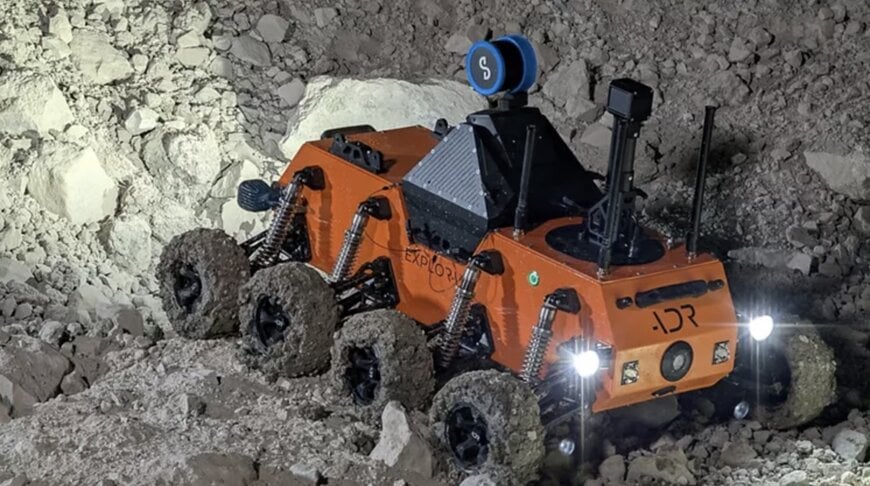
Australian robotics developer ADR deployed its Explora System using Intel Core Ultra processors, Intel Xeon computing nodes, and the Intel OpenVINO toolkit. Weighing 26 kg and rated for up to 12 hours of operational endurance, the ruggedized rover traverses unmapped mining corridors to collect 3D LiDAR point clouds, thermal signatures, optical imagery, and gas concentration data.
Telemetry and spatial mappings are transmitted wirelessly to surface or remote operators, eliminating direct worker exposure to unvented or unstable stopes. Computation at the edge utilizes the CPU, integrated Arc GPU, and onboard neural processing unit (NPU) within strict thermal constraints. This hardware configuration provides 2X encoder resolution, 1.5X faster overall system speedup, and a 40 percent improvement in edge AI processing headroom compared to previously evaluated embedded configurations.
Software Optimization and Workload Decoupling
The platform leverages Intel's oneAPI and OpenVINO toolkits to deploy vision models and process heavy spatial point-cloud calculations without relying on proprietary hardware frameworks. Optimizing point-cloud compression routines reduced CPU load by more than 50 percent, allowing the system to execute concurrent computer vision algorithms on a single computing package without secondary hardware accelerators.
These integrated models conduct real-time rock fragmentation analysis, monitor brow wear, and detect blast misfires before production machines advance. Upcoming iterations of the Explora system will deploy Intel Core Ultra Series 3 processors across all operational customer fleets over the next 12 months.
Autonomous Maintenance and Industrial Docking
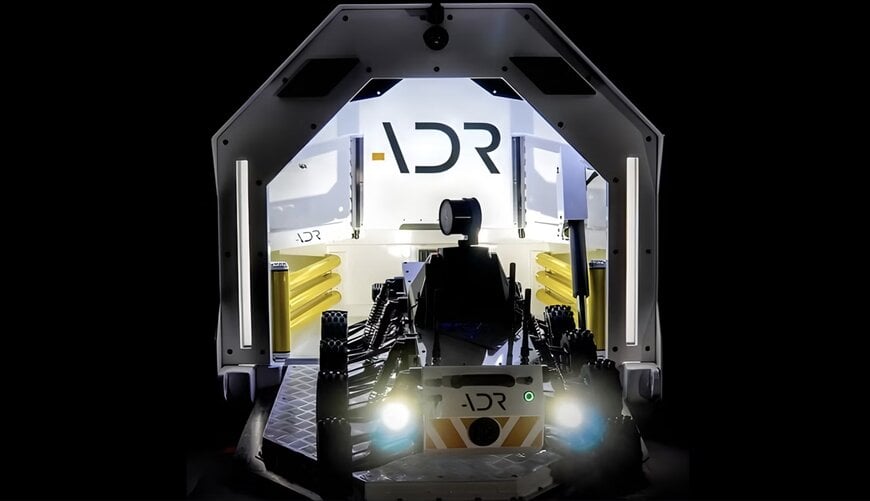
Upon completing mission sweeps, the rovers return to the permanent 460 kg ADR Docking Station connected directly to underground power and local network backbones. To counter dirt accumulation and abrasive slurry, the docking terminal activates an automated pneumatic air-blast wash cycle that clears debris from drive wheels and sensor optical windows.
Charging is handled through an inductive wireless power interface. Removing mechanical conductive contact pins prevents pin degradation and contact corrosion typically caused by acidic subterranean mine runoff and ambient moisture.
Additional Context
This section details technical specifications and competitive benchmarking not included in the original product announcement.
Operating at mining depths approaching 3,000 meters presents severe physical challenges for automated mobile platforms, including ambient rock temperatures exceeding 50°C, high humidity, corrosive mineral runoff, and a total absence of Global Navigation Satellite System (GNSS) signals. In standard subterranean operations, robotics rely on Simultaneous Localization and Mapping (SLAM) powered by multi-echo 3D LiDAR and inertial measurement units (IMUs) to navigate feature-sparse stopes without relying on external communication beacons.
Autonomous inspection benchmarks in heavy industries evaluate processing latency, ruggedization standards, and Mean Time Between Failures (MTBF). Specialized mining ground vehicles typically require minimum Ingress Protection ratings of IP67 or IP68, along with MSHA (Mine Safety and Health Administration) or ATEX/IECEx Zone 1/Zone 2 intrinsically safe certifications when deployed in combustible coal or gas-bearing strata. In contrast to conventional edge robotics that utilize dedicated add-in accelerators or separate neural compute cards, consolidating multi-modal sensor fusion, SLAM, and computer vision onto integrated NPU/GPU silicon architectures provides a thermal and power profile suited to sealed, convection-limited mechanical enclosures.
Edited by Romila DSilva, Induportals Editor, with AI assistance.
www.intel.com
-2296-71282-204124.png)