
www.magazine-industry-usa.com
05
'26
Written on Modified on
Modular Steam Boilers with Reduced Heat Transfer Surface Area
Miura America introduces a specialized 200-horsepower boiler configuration featuring a reduced heating surface to streamline operator administrative compliance across industrial manufacturing facilities.
miuraboiler.com
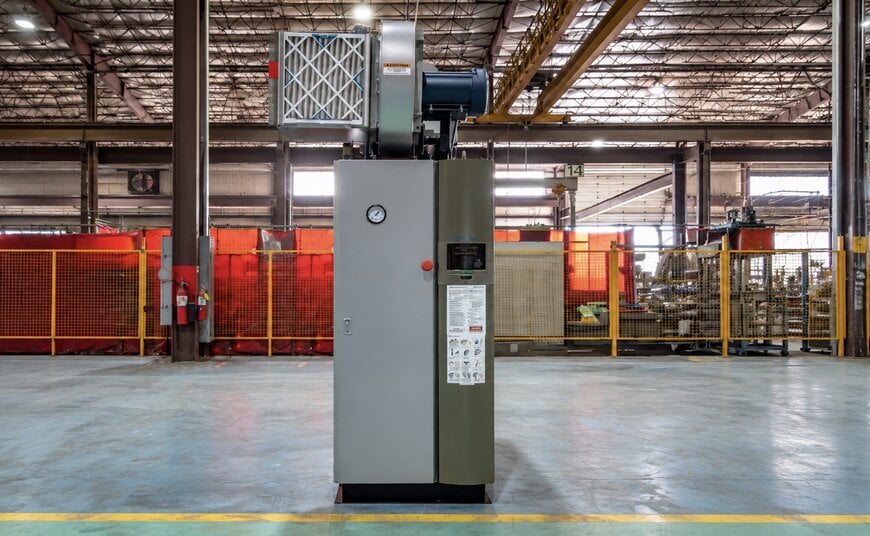
Miura America has released the LX-200 Ohio Special, a 200-horsepower steam boiler configured for continuous industrial steam generation in manufacturing and processing applications. The modular system maintains standard performance while providing a specialized physical configuration to address specific state administrative and staffing requirements.
Heating Surface Area and Administrative Compliance
The boiler, designated by part number LX200SG07-OH, delivers the thermal output of a standard 200-horsepower unit while restricting the internal heating surface to less than 360 square feet. This specific physical threshold allows facility engineers and plant managers to navigate Ohio's individual-boiler operator licensing regulations without downgrading to lower-capacity thermal equipment. By addressing the individual-boiler heating-surface threshold during the equipment selection phase, industrial plants can evaluate their boiler-room staffing structures and potentially reduce the administrative and compliance burdens associated with licensed operator attendance. The manufacturer notes that this configuration is not a universal regulatory exemption; facility managers must still confirm specific installation, inspection, and safety obligations with local authorities and their respective engineers of record.
Modular Boiler Architectures and Operational Scalability
Engineered for constrained boiler rooms and high-density manufacturing environments, the LX-200 Ohio Special features a compact footprint and rapid startup mechanisms to accommodate fluctuating thermal demand. In scenarios where facilities are replacing aging equipment or expanding production capacity, multiple boilers can be networked using a modular steam system approach. Rather than relying on a single centralized boiler, plants can distribute the total steam capacity across several smaller, coordinated units. This staging architecture ensures that active boilers dynamically adjust to the necessary steam load while unneeded capacity remains offline, conserving energy. This distributed setup also provides continuous redundancy, permitting individual units to undergo planned maintenance without interrupting the facility's overall thermal output.
Additional Context
This section details technical specifications and competitive benchmarking not included in the original news release.
In the commercial boiler sector, the mathematical ratio of boiler horsepower to total heating surface area directly dictates the level of regulatory oversight. Traditional fire-tube boilers typically require 5 square feet of heating surface per boiler horsepower, meaning a standard 200-horsepower unit possesses approximately 1,000 square feet of heating surface. This physical volume routinely triggers mandatory continuous attendance by licensed stationary engineers under standard state boiler codes. Water-tube and vertical tubeless designs from competing manufacturers such as Fulton and Cleaver-Brooks similarly aim to maximize heat transfer within compact footprints. However, engineering a 200-horsepower output strictly below the 360-square-foot threshold represents a highly specific geometric optimization. By densely packing the heat exchanger tubes, this configuration achieves a heat transfer rate that offers a measurable administrative advantage over conventional fire-tube designs, provided the encompassing boiler system adheres to all secondary local safety codes.
Edited by Aishwarya Mambet, Induportals Editor, with AI assistance.
www.miuraboiler.com
