
www.magazine-industry-usa.com
01
'26
Written on Modified on
Hybrid Industrial Gearbox Design with Lubrication Free Polymeric Components
The company igus developed a zinc die casting housing for modular worm gear screw jacks to support mechanical automation in demanding industrial operating environments.
www.igus.eu
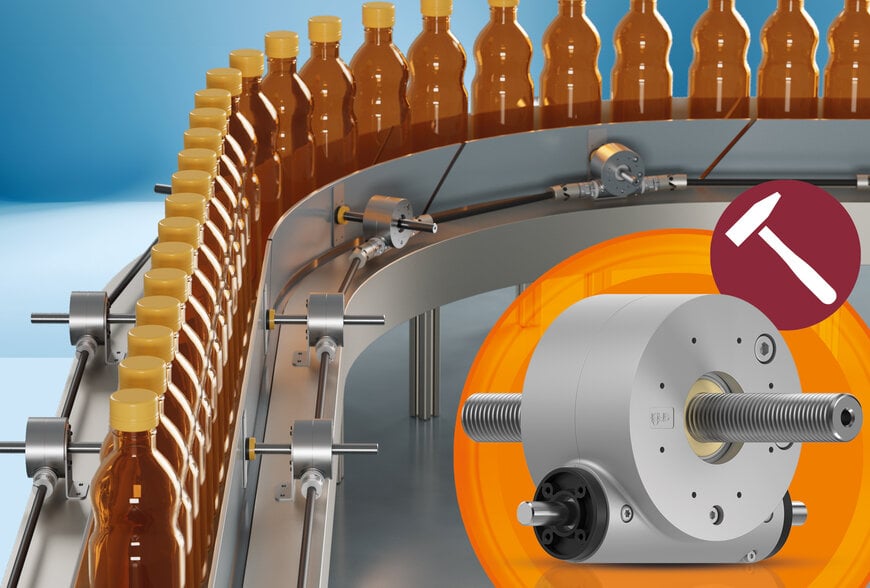
To address mechanical vulnerabilities in lightweight automation components, a hybrid gearbox solution has been developed for industrial material handling and format adjustment applications. This system integrates high-performance tribopolymers with a robust metal enclosure to withstand external mechanical impacts. The technology targets sectors requiring precise positioning and low maintenance, such as the packaging, food, beverage, and logistics industries.
Engineering Challenges in Industrial Automation Components
Standard mechanical adjustments within conveyor lines and processing plants frequently utilize either heavy, over-engineered metal gearboxes or lightweight plastic components. Traditional metal assemblies demand consistent lubrication schedules, increasing operating costs and contamination risks. Conversely, while standard polymer gearboxes eliminate lubrication maintenance, they often lack the structural rigidity required to survive accidental impacts from transported goods or high physical stress in demanding factory environments.
By decoupling the internal drivetrain mechanics from the structural exterior, this hybrid design isolates the moving elements from external structural loads. The implementation of high-performance polymer worm gears solves the problem of structural wear without relying on external lubricants, making the system viable for the digital supply chain where sensor-integrated, low-maintenance hardware is crucial.
Technical Specifications and Load Management
The integration of a zinc die-casting housing significantly alters the mechanical load distribution of the assembly. The increased structural rigidity enables the components to support a static mechanical load of up to 70 kg, while managing a dynamic operating load of up to 25 kg.
The choice of zinc die casting offers specific advantages for manufacturing and operation:
- Dimensional Accuracy: The low melting point of zinc alloys enables precise casting tolerances, minimizing the need for extensive secondary machining operations and ensuring precise alignment with the internal gear train.
- Corrosion Resistance: The material provides inherent resistance to environmental degradation, which is critical in washdown areas typical of food and beverage processing.
- Mechanical Damping: The mass and structural properties of the zinc alloy absorb localized impacts, preventing force transmission to the internal polymer components.
Inside the housing, the worm gear features a 4:1 transmission ratio. Constructed entirely from tribologically optimized polymers, the gear interface relies on solid lubricants embedded within the plastic matrix. As the gears mesh, these microscopic lubricants transfer to the mating surfaces, maintaining a low coefficient of friction throughout the components' operational lifespan. This mechanism ensures that the internal drive loop operates continuously without requiring grease or oil replenishment.
Industrial Implementation and Format Adjustment Use Cases
A primary application for this hybrid technology is automated format adjustment within beverage bottling lines. Guide rails and conveyor lanes must frequently adapt to varying container dimensions. This configuration requires multiple interconnected gearboxes to modify system widths or heights simultaneously.
By applying a hybrid gearbox system, design engineers can construct modular drive configurations that resist high structural forces during setup or accidental line jams. Concurrently, the lubrication-free properties eliminate the risk of oil leakage, which would otherwise contaminate consumer packaging or violate strict hygiene standards in food production facilities.
Additional Context: Technical Specifications and Competitive Benchmarking
This section details technical specifications and competitive benchmarking not included in the original product announcement.
Structural and Material Analysis
To evaluate the position of zinc-polymer hybrid gearboxes in industrial design, they can be directly compared against standard industrial options, such as traditional all-steel worm gearboxes and standard glass-fiber reinforced polymer gearboxes.
The zinc-polymer hybrid gearbox utilizes a zinc die-cast housing combined with a tribopolymer gear train that requires zero maintenance or lubrication. It supports a maximum static load capacity of 70 kg and a maximum dynamic load capacity of 25 kg. The ductile zinc shell ensures high impact resistance and high corrosion resistance with a medium relative component weight.
Traditional all-steel gearboxes rely on cast iron or carbon steel housings with a hardened steel or bronze gear train. These assemblies require periodic oil or grease replenishment. While they offer a much higher static load capacity exceeding 500 kg and a dynamic capacity exceeding 200 kg, they possess low inherent corrosion resistance, requiring paints or specialized coatings. They provide very high impact resistance but come with a high weight penalty.
Standard reinforced polymer gearboxes typically feature a glass-fiber polyamide housing with a standard polyoxymethylene gear train. They require no lubrication or only an initial grease run. However, their structural limits are lower, with a maximum static load capacity of 15 to 30 kg and a dynamic capacity of 5 to 10 kg. They offer excellent corrosion resistance and low component weight, but they present a risk of brittle fracture under mechanical impacts.
Comparative Positioning
Traditional all-steel or cast-iron gearboxes remain necessary for heavy-duty power transmission applications exceeding the 100 kg threshold. However, they introduce significant weight penalties and demand continuous maintenance. In contrast, standard reinforced polymer gearboxes offer optimal weight reduction but fail under the physical impacts common to material handling environments.
The hybrid configuration fills a specific technical niche. It provides a tenfold increase in impact resistance compared to pure polymer designs, while maintaining a completely dry, oil-free internal environment that traditional metal gearboxes cannot achieve. This makes the system an engineered compromise for automated adjustments where clean operation and moderate structural resilience are simultaneously required.
Edited by Sucithra Mani, Induportals editor – adapted by AI.
www.igus.com
Industrial Implementation and Format Adjustment Use Cases
A primary application for this hybrid technology is automated format adjustment within beverage bottling lines. Guide rails and conveyor lanes must frequently adapt to varying container dimensions. This configuration requires multiple interconnected gearboxes to modify system widths or heights simultaneously.
By applying a hybrid gearbox system, design engineers can construct modular drive configurations that resist high structural forces during setup or accidental line jams. Concurrently, the lubrication-free properties eliminate the risk of oil leakage, which would otherwise contaminate consumer packaging or violate strict hygiene standards in food production facilities.
Additional Context: Technical Specifications and Competitive Benchmarking
This section details technical specifications and competitive benchmarking not included in the original product announcement.
Structural and Material Analysis
To evaluate the position of zinc-polymer hybrid gearboxes in industrial design, they can be directly compared against standard industrial options, such as traditional all-steel worm gearboxes and standard glass-fiber reinforced polymer gearboxes.
The zinc-polymer hybrid gearbox utilizes a zinc die-cast housing combined with a tribopolymer gear train that requires zero maintenance or lubrication. It supports a maximum static load capacity of 70 kg and a maximum dynamic load capacity of 25 kg. The ductile zinc shell ensures high impact resistance and high corrosion resistance with a medium relative component weight.
Traditional all-steel gearboxes rely on cast iron or carbon steel housings with a hardened steel or bronze gear train. These assemblies require periodic oil or grease replenishment. While they offer a much higher static load capacity exceeding 500 kg and a dynamic capacity exceeding 200 kg, they possess low inherent corrosion resistance, requiring paints or specialized coatings. They provide very high impact resistance but come with a high weight penalty.
Standard reinforced polymer gearboxes typically feature a glass-fiber polyamide housing with a standard polyoxymethylene gear train. They require no lubrication or only an initial grease run. However, their structural limits are lower, with a maximum static load capacity of 15 to 30 kg and a dynamic capacity of 5 to 10 kg. They offer excellent corrosion resistance and low component weight, but they present a risk of brittle fracture under mechanical impacts.
Comparative Positioning
Traditional all-steel or cast-iron gearboxes remain necessary for heavy-duty power transmission applications exceeding the 100 kg threshold. However, they introduce significant weight penalties and demand continuous maintenance. In contrast, standard reinforced polymer gearboxes offer optimal weight reduction but fail under the physical impacts common to material handling environments.
The hybrid configuration fills a specific technical niche. It provides a tenfold increase in impact resistance compared to pure polymer designs, while maintaining a completely dry, oil-free internal environment that traditional metal gearboxes cannot achieve. This makes the system an engineered compromise for automated adjustments where clean operation and moderate structural resilience are simultaneously required.
Edited by Sucithra Mani, Induportals editor – adapted by AI.
www.igus.com
-2296-71282-204124.png)