
www.magazine-industry-usa.com
04
'26
Written on Modified on
Automation Architectures for EV Battery Dismantling and Lifecycle Recycling
Festo develops modular handling systems and process automation solutions to scale the circular economy for lithium-ion and next-generation solid-state batteries.
www.festo.com
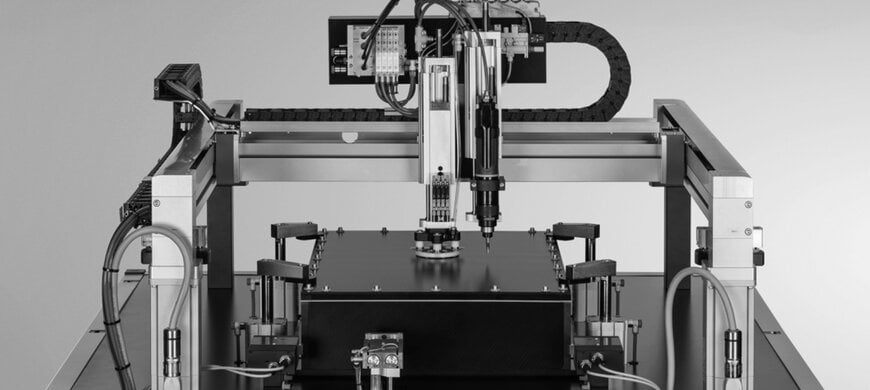
Industry experts estimate that approximately 3 million tonnes of spent electric vehicle (EV) batteries will require recycling by 2030. To secure critical raw materials and establish a sustainable circular economy, the manufacturing sector requires modular automation concepts that span the entire battery lifecycle—from initial cell production and pack assembly to automated decommissioning and material separation.
Degradation Parameters and Second-Life Applications
EV battery packs typically exhibit diminished performance characteristics after 2,000 charge-discharge cycles, representing roughly 300,000 kilometers driven over an operational lifespan of 8 to 10 years. At this stage, the reduced charging capacity restricts vehicle range, making automotive operation inefficient.
However, because these batteries retain a residual capacity of approximately 80%, they can be integrated into secondary infrastructure, such as stationary energy storage systems or battery farms. Once this second lifecycle is completed, the units must enter the recycling loop to reclaim high-value raw materials. Transitioning this stage from manual labor to automated processing is essential to increase throughput, improve flexibility, and safeguard operators.
Automated Pack Disassembly and Hydrometallurgical Processing
The initial phase of the industrial recycling process requires the mechanical breakdown of large battery packs into smaller modules, individual cells, and auxiliary components. Historically a manual and time-consuming task, Festo addresses this bottleneck through modular mechanical disassembly systems. These setups combine automated handling units, specialized gripper systems, and standardized pneumatic and electrical automation components to accelerate pack deconstruction.
Following mechanical separation, the recovery of metals and plastics requires chemical isolation. Festo supplies dedicated process automation products tailored for hydrometallurgical recycling workflows. This includes a range of specialized process valves designed to safely regulate the flow of the gaseous, solid, or highly corrosive liquid mediums used during chemical extraction and material classification.
Gigafactory Infrastructure and Solid-State Development
The scaling of the EV market has driven the construction of large-scale gigafactories, which require vast operational footprints, optimized transport connections, and sustainable energy supplies. Because these massive facilities are frequently established away from urban centers, manufacturers face a structural shortage of specialized technical labor trained in highly automated, high-throughput production environments.
Concurrently, the industry is preparing for future shifts in battery chemistry. Festo is actively involved in research initiatives focused on manufacturing methodologies for solid-state batteries. These next-generation energy storage systems are projected to surpass the power density of current lithium-ion cells and will require modified automation architectures upon commercial scale-up.
Technical Workforce Qualification via Festo Didactic
To resolve the industrial skills gap associated with electromobility and automated recycling, Festo Didactic delivers targeted further training and qualification programs. These technical education frameworks prepare workforce personnel for highly automated environments through a multi-tiered approach that incorporates practical, on-site instruction conducted directly within manufacturing plants.
Additionally, the corporate framework supports the design and implementation of turnkey, in-house learning factories for industrial enterprises. This hands-on training is reinforced by scalable digital learning modules accessible via the Festo Learning Experience (Festo LX) platform, allowing workforce teams to study advanced automation, robotics, and industrial sustainability from any location.
Edited by Maria Brueva, Induportals editor – adapted by AI.
www.festo.com
-2296-71282-204124.png)