
www.magazine-industry-usa.com
02
'26
Written on Modified on
RTUg Linear Transfer System for Industrial Robotics
Rollon introduces a streamlined, modular Robot Transfer Unit designed for dependable performance in harsh industrial automation environments.
www.rollon.com
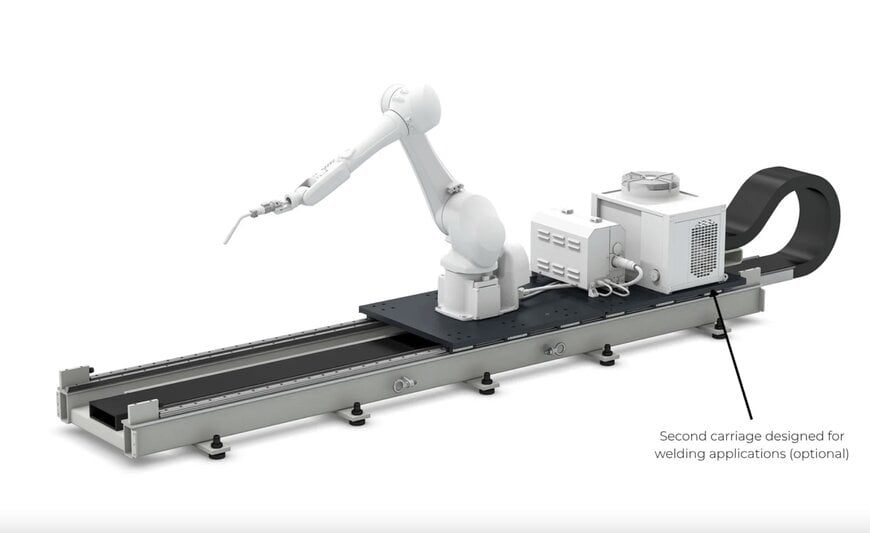
Rollon has introduced the RTUg (Glide), a streamlined addition to the company’s modular Robot Transfer Unit portfolio engineered for robotic transfer applications in harsh industrial environments. The system provides system integrators and manufacturers with a practical, cost-efficient solution focused on reliability and simplified features.
Modular System Foundation and Configuration
The RTUg is built on the established foundation of Rollon's modular RTU platform. It integrates the flexibility and scalability of the company’s 7th-axis technology into a streamlined configuration designed to ensure ease of maintenance, high reliability, and reduced production lead times.
The system expands Rollon's existing RTU lineup, offering a solution for industrial applications that require strong operational performance and durability without unnecessary structural complexity. The designation "g" stands for Glide, representing the system’s clean, efficient physical movement and its simplified approach to robot transfer automation.
According to Andrew Allendorf, Business President Rollon Americas, the RTUg was developed to give customers a dependable modular transfer unit that delivers core performance while lowering overall project costs and implementation timelines. The unit is aimed specifically at industrial applications where durability, straightforward system integration, and serviceability serve as critical structural priorities.
Structural Features and Application Range
Engineered for mid-range robotic applications, the RTUg features a rigid steel structure optimized for industrial environments, enabling it to withstand welding operations, manufacturing debris, and demanding operating conditions. The design retains the core modular philosophy of the Rollon RTU line, allowing for flexible configuration options and future adaptation as manufacturing requirements evolve.
To support demanding automation environments like welding, Rollon offers the RTUg with an optional second carriage configuration. This dual-carriage setup provides enhanced stability, improved load distribution, and additional tooling support. Beyond specialized welding applications, the unit operates as a versatile linear transfer system across a wide range of industrial processes, including material handling, machine tending, assembly, and general manufacturing.
The RTUg supports component payloads ranging from 30 kg up to 680 kg while maintaining smooth and dependable motion. Production parameters include an optimized build process capable of supporting factory lead times of 4 to 6 weeks, simplified maintenance access ports, robust construction for environmental resistance, and the availability of custom RAL paint finishes.
Portfolio and Manufacturing Base
As an addition to Rollon's modular automation lineup, the RTUg complements the broader RTU family, which comprises steel and aluminum transfer units designed to extend robotic reach, boost floor productivity, and optimize factory space utilization. Rollon RTUs are applied globally across automotive, welding, material handling, machine tending, and general industrial automation sectors. The RTUg is manufactured and supported in the United States, representing the company's ongoing investment in modular automation infrastructure intended to enhance customer flexibility, scalability, and market delivery speeds.
Additional Context
This section details technical specifications not included in the original news release.
Robot Transfer Units (RTUs), commonly referred to as 7th-axis linear actuators, extend the operating envelope of standard 6-axis industrial robots by translating them along a linear path. In mid-to-high payload automation applications, these linear systems utilize precise mechanical drive mechanisms, typically consisting of helical rack-and-pinion systems or high-capacity ball screws. Helical rack-and-pinion drives are frequently selected for long travel lengths exceeding several meters because they avoid the critical speed limitations and whipping phenomena associated with long, unsupported rotating ball screws.
To maintain positioning accuracy under heavy dynamic loads, heavy-duty RTUs incorporate profile rail guides featuring linear ball bearing or roller bearing carriages. These guiding components are engineered with high static and dynamic load capacities to manage the high overturning moments generated during rapid robotic acceleration and deceleration phases.
In environments containing welding splatter, abrasive dust, or machining debris, linear guide systems require specialized protection to prevent contamination of the rolling elements. This protection commonly involves integrated telescopic steel covers, heavy-duty polyurethane wipers, and pressurized air-purging systems within the bearing blocks to repel particulate matter. Additionally, automatic lubrication systems are frequently integrated to supply continuous grease or oil to the raceways, reducing friction, preventing fretting corrosion, and maximizing the operating lifespan of the mechanical guidance components.
Edited by Romila DSilva, Induportals Editor, with AI assistance.
www.rollon.com
-2296-71282-204124.png)