
www.magazine-industry-usa.com
22
'26
Written on Modified on
Quay Crane Automation Targets Port Efficiency Gains
ABB introduces an AI-enabled waterside automation system to reduce manual quay crane operations at container terminals.
global.abb
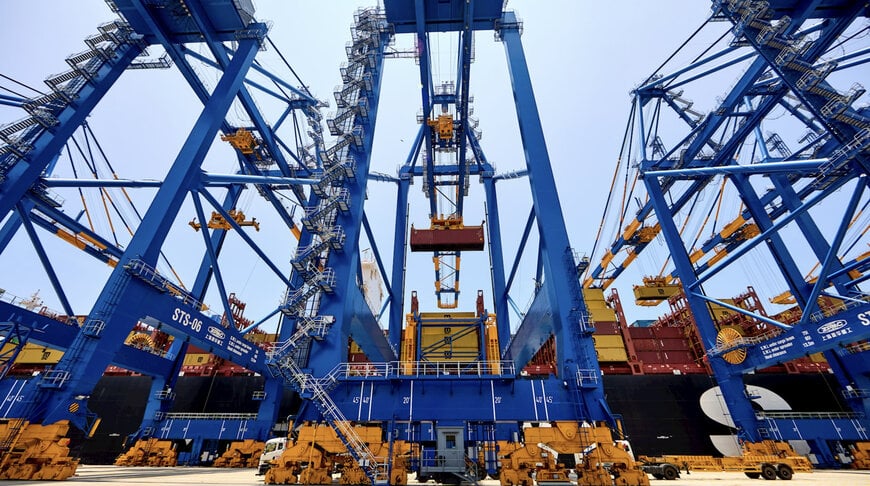
ABB has launched a waterside automation solution designed to automate vessel-side quay crane operations, addressing one of the remaining manual processes in container terminal handling. The system combines AI, sensor technologies and integrated operational functions to automate container lifting and positioning while reducing dependence on continuous operator control.
The technology is intended to support gradual adoption of autonomous crane operations as ports face increasing pressure to improve schedule reliability, throughput and workforce flexibility.
AI and sensor integration automate vessel-side container handling
Container terminals have widely adopted automation across yard operations, but ship-to-shore crane processes continue to depend heavily on manual intervention. ABB’s new solution targets this operational gap by automating activities performed over the vessel, including container pickup, placement and movement coordination.
The system integrates vision-based and motion sensors with AI and real-time analytics to monitor container position, crane movement and environmental conditions. These inputs enable automated execution of lifting tasks while adjusting to operational variables such as vessel movement alongside and across the quay, as well as weather-related disruptions.
According to ABB, the solution also incorporates exception handling, stowage confirmation, optical character recognition (OCR) and digital work instructions within a unified workflow. Integrating these functions may reduce manual verification steps and support more consistent execution across the full container handling cycle.
Quay crane pooling enables changes in operator workflows
A central feature of the system is the separation of operators from individual cranes. Rather than directly controlling complex vessel-side movements, operators supervise multiple cranes remotely from an office-based environment.
This approach enables quay crane pooling, where a smaller number of operators oversee several crane systems depending on workload conditions. In container terminals, pooled operations can increase workforce flexibility and potentially reduce operational interruptions associated with individual crane assignments.
The transition toward remote supervision reflects broader trends in port automation, where operators increasingly shift from manual equipment control toward monitoring and intervention roles.
Autonomous port operations require integration beyond crane control
ABB states the solution is designed as part of a progressive transition toward autonomous quay crane operations rather than full autonomy from initial deployment. The company’s role as a system integrator enables coordination between crane systems, handling processes and operator interfaces across terminal environments.
Container terminal automation increasingly depends on interoperability between equipment control systems, cargo flow management and safety mechanisms. Integrating these functions can influence throughput, vessel turnaround times and terminal operating efficiency.
Additional Context
Technical specifications and competitive benchmarking not included in the original product announcement
Port automation systems for quay crane operations compete with solutions from suppliers including Konecranes, ZPMC and Kalmar, where benchmark criteria commonly include automation level, remote operation capability, AI integration, vessel-side handling accuracy and throughput optimisation. Similar technologies have focused on remote-controlled or semi-automated crane operations, while full automation of waterside container handling remains less widely deployed.
ABB’s approach differentiates through integration of AI, OCR, stowage confirmation and exception handling within a single workflow, combined with quay crane pooling capability. Comparable automated port systems often prioritise remote operation or crane automation independently, whereas integration across the full handling cycle has become an increasing competitive factor in container terminal digitalisation.
Edited by Natania Lyngdoh, Induportals editor, assisted by AI.
www.abb.com
-2296-71282-204124.png)