
www.magazine-industry-usa.com
12
'26
Written on Modified on
Industrial Microgrid Integration for Carbon-Neutral Manufacturing and Grid Stability
Siemens and Duke Energy collaborate to implement a 1.25-megawatt microgrid at the Wendell facility to enhance operational resilience and support regional distribution.
www.siemens.com
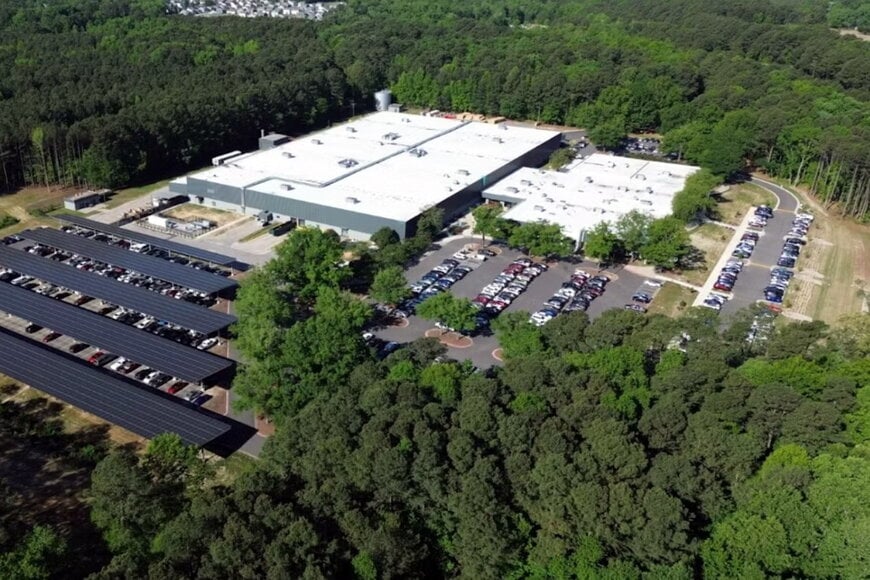
The implementation of an advanced on-site microgrid at the Siemens Electrification and Automation headquarters in Wendell, North Carolina, establishes a decentralized energy system designed for industrial autonomy. This technical solution integrates renewable generation with battery storage to support carbon-neutral manufacturing while interacting with the local distribution network managed by Duke Energy.
Context and Infrastructure Integration
The project addresses the requirement for high operational resilience in facilities producing medium-voltage power equipment, where grid instability can disrupt precise manufacturing cycles. Siemens serves as the technology provider and site operator, while Duke Energy acts as the utility partner for interconnection. Cooperation was essential to synchronize the microgrid’s 1.25-megawatt (MW) solar photovoltaic carport array and 3.9-megawatt-hour (MWh) battery energy storage system (BESS) with the existing regional power infrastructure.
Technical Architecture and Control Systems
The system operates through a multi-layered hardware and software architecture. Key technical components include:
- Primary Control: The SICAM A8000 Microgrid Controller manages load balancing and islanding capabilities.
- Power Conversion: KACO string inverters convert DC solar generation, while SIPROTEC universal relays provide circuit protection and synchronization.
- Data Management: The Desigo building management system and Electrification X cloud analytics facilitate communication between the microgrid and facility loads, allowing for real-time monitoring.
This configuration enables the site to participate in net energy metering. When local generation exceeds demand, the system exports electricity to Duke Energy’s distribution network, contributing to broader grid stability.
Operational Impact and Workforce Development
The integration of the microgrid, alongside campus-wide efficiency measures, reduces grid energy consumption by 2.5 MWh annually. This setup allows for dynamic load management, particularly for on-site electric vehicle (EV) charging via VersiCharge units, which utilize self-generated solar energy.
The partnership extends to educational infrastructure through collaboration with Wake Technical Community College. This technical alliance focuses on developing an on-campus microgrid for student training, ensuring the workforce is proficient in maintaining digital infrastructure and industrial automation systems.
Results and Reliability
The microgrid serves as a functional model for sustainable manufacturing, providing a buffer against grid outages that could otherwise jeopardize production. By combining localized generation with intelligent storage, the facility achieves process stability and a measurable reduction in its carbon footprint. The interconnection with Duke Energy ensures that the industrial demand remains balanced with the regional supply, demonstrating a scalable approach to grid modernization and energy security.
Edited by Evgeny Churilov, Induportals Media - Adapted by AI.
www.siemens.com
Operational Impact and Workforce Development
The integration of the microgrid, alongside campus-wide efficiency measures, reduces grid energy consumption by 2.5 MWh annually. This setup allows for dynamic load management, particularly for on-site electric vehicle (EV) charging via VersiCharge units, which utilize self-generated solar energy.
The partnership extends to educational infrastructure through collaboration with Wake Technical Community College. This technical alliance focuses on developing an on-campus microgrid for student training, ensuring the workforce is proficient in maintaining digital infrastructure and industrial automation systems.
Results and Reliability
The microgrid serves as a functional model for sustainable manufacturing, providing a buffer against grid outages that could otherwise jeopardize production. By combining localized generation with intelligent storage, the facility achieves process stability and a measurable reduction in its carbon footprint. The interconnection with Duke Energy ensures that the industrial demand remains balanced with the regional supply, demonstrating a scalable approach to grid modernization and energy security.
Edited by Evgeny Churilov, Induportals Media - Adapted by AI.
www.siemens.com
-2296-71282-204124.png)