
www.magazine-industry-usa.com
16
'26
Written on Modified on
Automatic Transfer Switches with Bypass for Critical Power
Siemens-owned Russelectric develops bypass/isolation transfer switches to support continuous power delivery and maintenance flexibility in data centers and critical infrastructure systems.
www.siemens.com
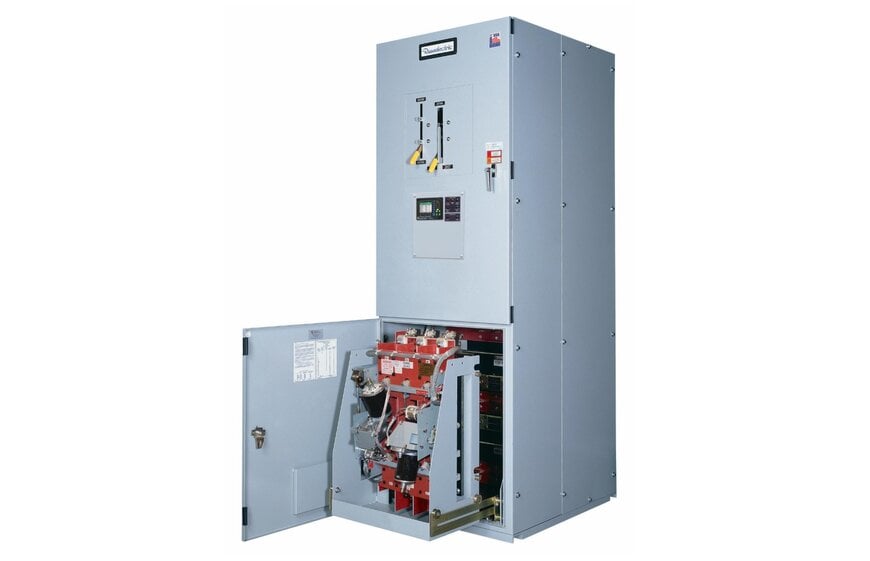
Reliable power continuity is essential in data centers and other critical infrastructure, where even brief interruptions can disrupt operations. Automatic transfer switches (ATS) play a central role in switching between power sources, but maintenance constraints can introduce operational risk. In this context, Russelectric, a Siemens business, has introduced RTS-30 and RTS-03 Series automatic transfer switches with integrated bypass/isolation capability.
Maintaining uptime during maintenance operations
The bypass/isolation design allows the transfer switch to be isolated and de-energized while maintaining power flow to the load. This enables maintenance, testing, or repair without interrupting operations, which is particularly relevant for data centers and facilities requiring continuous uptime.
In cases where the automatic switching function is unavailable, the system can bypass power directly from a live source to the load, ensuring uninterrupted supply during fault or maintenance scenarios.
Electrical performance and compliance standards
The RTS-30 and RTS-03 Series switches are designed for 480 VAC systems and are tested under UL 1008 for closing and withstand performance. The RTS-30 Series supports 30-cycle closing and withstand ratings, while the RTS-03 Series supports 3-cycle performance, reflecting faster response characteristics in high-fault conditions.
When coordinated with current-limiting fuses, RTS-03 Series switches achieve UL-listed closing and withstand ratings up to 200,000 amperes at 480 VAC. These ratings define the ability of the switch to handle fault currents without mechanical or thermal failure.
Contact design and fault tolerance
The switch contacts are machined from solid copper and include tungsten arcing tips to manage arc energy during switching events. Contact pad materials are selected to limit overheating and prevent welding under high fault current conditions.
For RTS-30 Series switches, the contact assemblies are engineered to withstand repeated high-energy switching cycles, maintaining electrical integrity over extended operating lifetimes.
Mechanical construction and serviceability
The switches use a full draw-out construction, allowing removal of the transfer switch assembly without requiring electrical or mechanical disconnections. This design supports safer servicing and reduces downtime during component replacement.
Mechanical linkages and assemblies are precision-machined, with anodized steel rods and ball joint fittings designed to maintain alignment and durability under repeated operation.
Role in critical power and digital infrastructure
Automatic transfer switches with bypass/isolation capability are widely used in data centers, healthcare facilities, and industrial plants where power redundancy is essential. These systems support continuous operation within a broader digital supply chain, where power reliability directly impacts system availability and data integrity.
By combining high fault current ratings, maintenance flexibility, and robust mechanical design, the RTS-30 and RTS-03 Series address operational requirements for facilities that depend on uninterrupted electrical supply.
Edited by Aishwarya Mambet, Induportals Editor, with AI assistance.
www.siemens.com
