
www.magazine-industry-usa.com
08
'26
Written on Modified on
DENSO reduces emissions with automated compressed air system
CAM Technologies deploys Rockwell Automation system, cutting emissions by 3,110 tons annually.
www.rockwellautomation.com
DENSO, a Tier 1 automotive supplier, set a corporate target to achieve carbon neutrality across all facilities by 2035. At its thermal manufacturing plant in Battle Creek, Michigan, compressed air systems were identified as a major source of energy inefficiency.
The facility relied on aging compressors, some installed more than 30 years ago, operating continuously regardless of demand. The absence of centralized control led to excessive energy consumption, with compressors running overnight, during weekends and under low-load conditions.
Additionally, the use of outdated refrigerants and inefficient drying systems further increased environmental impact and operational costs.
Data-driven design of an optimized system
To address these challenges, DENSO partnered with CAM Technologies, a member of the Rockwell Automation PartnerNetwork. In collaboration with Energy Systems Group, a comprehensive energy audit was conducted.
The study provided baseline data on power consumption, air demand, pressure levels and flow rates. This data-driven approach enabled the design of a turnkey solution tailored to the facility’s operational requirements.
Modernizing compressed air infrastructure and control
The solution included the installation of three new high-efficiency compressors, two modern air dryers and the complete elimination of R-22 refrigerant previously used in older systems.
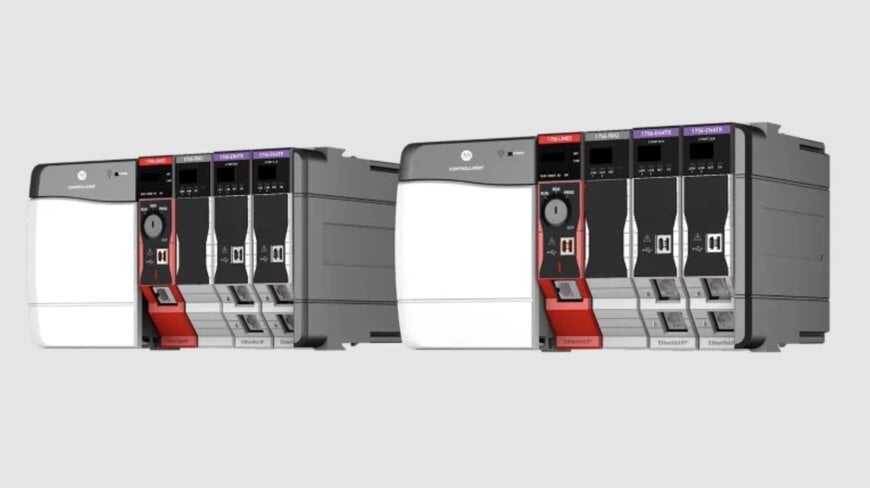
A key component was the integration of an automated control system based on Rockwell Automation technology. The system uses a CompactLogix controller and industrial automation components to coordinate compressor operation based on real-time demand.
Operator visibility and control are provided through HMI interfaces, while energy monitoring tools track system performance and support ongoing optimization.
By connecting the compressed air system to the building automation infrastructure, compressors can now be cycled dynamically, operating only when required rather than running continuously.
Significant reductions in energy use and emissions
The modernization delivered measurable improvements in both operational efficiency and environmental performance:
- 3,110 metric tons/year reduction in carbon emissions
- Lower energy consumption through demand-based compressor operation
- Reduced operational costs and improved system efficiency
The emissions reduction is equivalent to the annual electricity consumption of more than 700 households.
Enabling long-term efficiency and visibility
The system continuously collects operational data, which is stored in the cloud and visualized through dashboards. This enables maintenance teams to monitor performance, identify inefficiencies and respond quickly to potential issues.
By combining infrastructure upgrades with automation and data analytics, DENSO has established a more efficient and controllable compressed air system.
Supporting decarbonization through industrial automation
The project demonstrates how modernizing utility systems such as compressed air can contribute significantly to broader sustainability goals. Through automation, real-time monitoring and data-driven optimization, DENSO has reduced emissions while improving operational reliability.
This approach provides a scalable model for other manufacturing facilities seeking to reduce scope 2 emissions and improve energy efficiency without disrupting production.
Edited by Romila DSilva, Induportals Editor, with AI assistance.
Enabling long-term efficiency and visibility
The system continuously collects operational data, which is stored in the cloud and visualized through dashboards. This enables maintenance teams to monitor performance, identify inefficiencies and respond quickly to potential issues.
By combining infrastructure upgrades with automation and data analytics, DENSO has established a more efficient and controllable compressed air system.
Supporting decarbonization through industrial automation
The project demonstrates how modernizing utility systems such as compressed air can contribute significantly to broader sustainability goals. Through automation, real-time monitoring and data-driven optimization, DENSO has reduced emissions while improving operational reliability.
This approach provides a scalable model for other manufacturing facilities seeking to reduce scope 2 emissions and improve energy efficiency without disrupting production.
Edited by Romila DSilva, Induportals Editor, with AI assistance.
-2296-71282-204124.png)