
www.magazine-industry-usa.com
03
'26
Written on Modified on
Virtual Assembly Simulation Targets Early Manufacturing Defects
Keysight introduces a simulation platform that models assembly processes and integrates forming-to-assembly workflows to improve accuracy and reduce late-stage production issues.
www.keysight.com
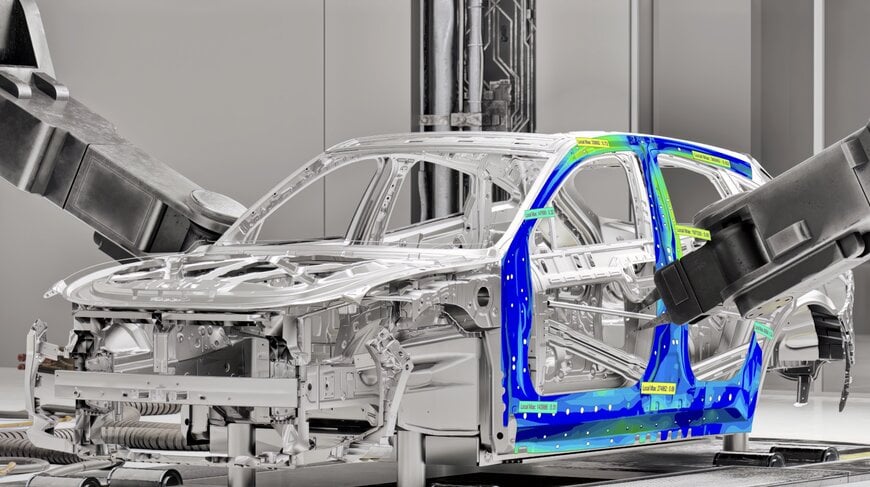
Keysight Technologies has launched a virtual process simulation solution designed to identify assembly-related defects earlier in product development. The platform enables manufacturers to simulate assembly operations digitally, reducing reliance on physical prototyping and late-stage validation.
Addressing late-stage assembly failures
In automotive and industrial manufacturing, assembly defects often emerge during physical build stages, where correction costs are highest. Issues such as dimensional deviations, misalignment, and distortion can lead to rework, production delays, and warranty claims.
By shifting defect detection earlier in the development cycle, the new system aims to reduce these risks and improve overall production efficiency.
Simulation of real assembly processes
The solution enables engineers to replicate key shop-floor operations, including part positioning, clamping, and joining. These processes are modeled through guided workflows and predefined templates, allowing users to perform simulations without requiring advanced expertise in Finite Element Method (FEM).
This approach lowers the barrier to simulation adoption while enabling detailed analysis of assembly behavior, including distortion and dimensional variation.
Integration across the manufacturing workflow
A key feature of the platform is its integration with existing stamping simulation tools. Data generated during forming processes can be carried forward into assembly simulations, creating a continuous digital workflow from part production to final assembly.
This integration improves traceability of variations introduced at different stages and allows engineers to evaluate cumulative effects on final product geometry.
Correlation with physical validation data
The system supports validation against pre-production scan data, enabling comparison between simulated and measured results. This helps improve model accuracy and builds confidence in simulation-driven decision-making.
By aligning digital predictions with physical outcomes, manufacturers can reduce iterative testing cycles and optimize process parameters more effectively.
Application in automotive and industrial manufacturing
The platform is particularly relevant for industries with complex assemblies and tight tolerances, such as automotive body-in-white production. Early identification of dimensional risks supports improved fit and finish, reduced scrap rates, and more predictable production ramp-up.
Role in the digital supply chain
The introduction of virtual assembly simulation reflects a broader shift toward a digital supply chain, where design, production, and validation processes are increasingly connected through data-driven tools. By integrating forming and assembly stages into a unified environment, manufacturers gain earlier visibility into process interactions and potential defects.
Such solutions contribute to shorter development cycles, improved product quality, and reduced costs associated with late-stage corrections.
Edited by Romila DSilva, Induportals Editor, with AI assistance.
www.keysight.com
-2296-71282-204124.png)