
www.magazine-industry-usa.com
22
'26
Written on Modified on
Expanded Solar Power Integration at Kennecott Copper Operations
Rio Tinto and Bechtel coordinate technical implementation with 5N Plus and First Solar to deploy an expanded solar infrastructure using on-site produced tellurium for enhanced renewable energy generation.
www.riotinto.com
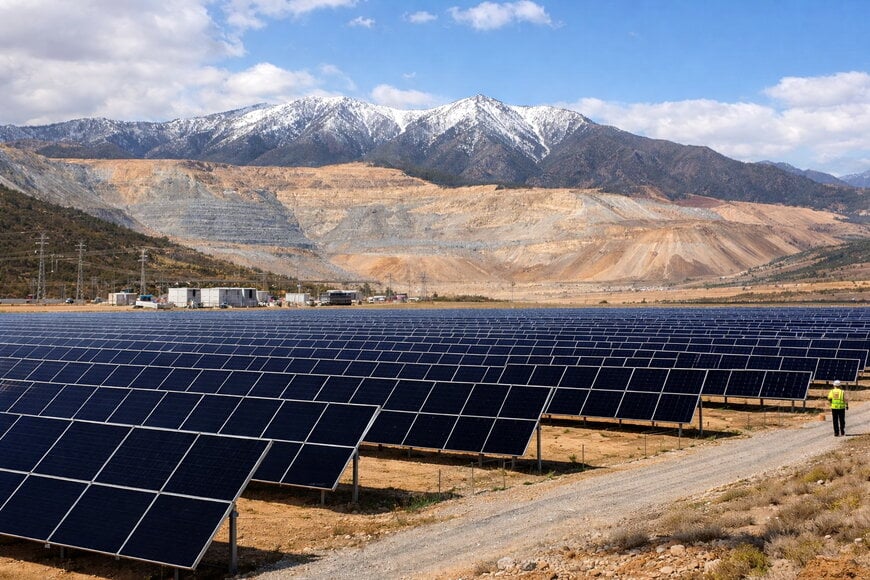
Rio Tinto has expanded the renewable energy capacity at its Kennecott copper mining operation in Utah by energizing a new 25-megawatt (MW) solar power plant, bringing the site’s total installed solar capacity to 30 MW. The expansion builds on an existing 5 MW solar array that began operations in 2023. The combined solar generation capacity is sufficient to power the annual electrical demand of approximately 1,000 average U.S. homes and is expected to reduce the mine’s Scope 2 greenhouse gas emissions by roughly 6 percent relative to its prior baseline.
Circular Critical Minerals Supply Chain
A distinguishing aspect of this project is the integration of a domestic critical minerals supply chain. Kennecott produces tellurium as a byproduct of copper refining, making it one of only two sites in the United States capable of producing this metal, which is essential for certain photovoltaic technologies. Tellurium mined and refined at Kennecott is exported to a processing facility in Canada where it is converted into semiconductor materials. These materials are subsequently used in the manufacture of photovoltaic solar panels installed back at the Utah operation, maintaining the entire tellurium value chain within North America. This integration of mineral production, processing, and energy generation differentiates Rio Tinto’s deployment from typical solar projects that rely on tellurium imports.
Project Development and Construction
Construction of the 25 MW solar plant commenced in October 2024 in partnership with Bechtel, with commissioning completed in October 2025 and energization achieved in December of the same year. The facility comprises more than 71,000 photovoltaic panels deployed on site. The adjacent configuration with the existing 5 MW array enables consolidated operations and land use.
Emissions and Energy Performance
The combined solar installations contribute to Rio Tinto’s broader decarbonization objectives by displacing a portion of grid-sourced electricity at Kennecott with on-site renewable generation. Annual reductions in Scope 2 emissions are estimated at approximately 20,000 tonnes of carbon dioxide equivalent, equating to the removal of several thousand average passenger vehicles from operation in a typical year. These emissions benefits are part of a portfolio of measures at the site, which include transitioning to renewable diesel and other clean energy procurement arrangements to reduce carbon intensity.
Strategic Context and Competitive Position
By localizing the supply of tellurium and incorporating it directly into solar infrastructure at the point of consumption, Rio Tinto’s Kennecott operation exemplifies a more resilient and geographically concentrated critical minerals supply chain. This approach contrasts with many solar deployments that depend on globally distributed inputs, reducing exposure to geopolitical supply variability and transport emissions. In doing so, the Kennecott project supports North American renewable energy manufacturing capacity and infrastructure security while demonstrating a practical linkage between extractive and renewable sectors within the United States.
www.riotinto.com
-2296-71282-204124.png)