
www.magazine-industry-usa.com
09
'26
Written on Modified on
Behind-the-Meter AI Data Centers on Renewable Power
Soluna Holdings and Siemens are piloting a controlled, behind-the-meter power architecture to stabilize GPU-driven AI workloads directly at renewable energy sites.
www.siemens.com
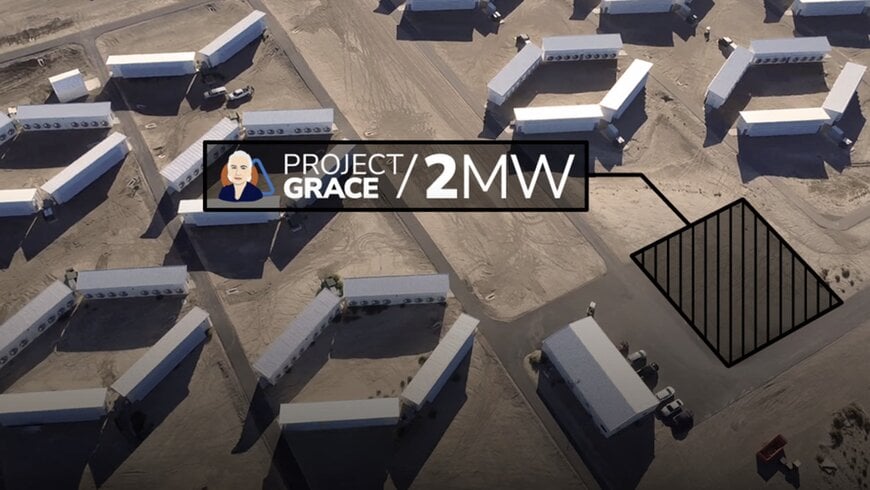
Soluna Holdings and Siemens have signed a memorandum of understanding to develop and validate a behind-the-meter power-and-controls architecture designed for AI and high-performance computing workloads with highly variable power demand. The collaboration centers on a 2 MW pilot installation at Soluna’s Project Grace site in Texas, where compute infrastructure will operate directly on renewable generation without relying on grid export or import.
Why behind-the-meter AI matters
AI and high-performance computing workloads, particularly those driven by GPUs, exhibit rapid load steps and short-term power swings. These characteristics challenge conventional data center designs and can strain both grid-connected and isolated renewable systems. Behind-the-meter deployments—where compute infrastructure is directly coupled to generation assets—offer a way to utilize curtailed or stranded renewable energy, but require fast, deterministic control of electrical infrastructure to maintain stability, power quality, and equipment protection.
The Soluna–Siemens pilot is intended to address this gap by documenting how renewable-powered compute behaves under realistic, rapidly changing AI workloads, and how electrical systems can respond without grid buffering.
Technical scope of the Project Grace pilot
The 2 MW pilot will integrate Siemens electrical and mechanical infrastructure, including transformers, switchgear, power conversion equipment, and ancillary systems. Control and monitoring will be handled through the Siemens SICAM SCADA platform, enabling high-resolution visibility into load behavior, power quality, and system response during fast transitions.
A structured commissioning process will be used to capture performance data under representative GPU-driven workloads. The focus is on validating control strategies during rapid load changes, assessing system resilience, and establishing repeatable performance metrics for scalability and energy efficiency in behind-the-meter environments.
Data-driven validation for scalable deployment
Rather than targeting immediate commercial scale, the pilot is designed to generate operational evidence. Performance data and control learnings will be used to define a repeatable blueprint for future deployments at renewable generation sites. This includes documenting how existing electrical infrastructure can be optimized to absorb volatile compute demand while maintaining stable operation.
By operating directly at the generation source, the approach aims to reduce reliance on grid interconnections, minimize curtailment of renewable energy, and provide predictable power costs for compute-intensive applications.
Implications for renewable-powered compute infrastructure
If validated, the behind-the-meter model demonstrated at Project Grace could support broader deployment of AI and high-performance computing at wind and solar sites, particularly where grid capacity is constrained. The collaboration combines Siemens’ experience in power systems, automation, and monitoring with Soluna’s renewable-first data center model, addressing a key challenge in scaling AI compute while managing energy efficiency and grid impact.
The pilot is positioned as a technical reference for future renewable compute projects, focusing on measurable outcomes in stability, efficiency, and operational repeatability rather than speculative performance claims.
www.siemens.com
