
www.magazine-industry-usa.com
24
'26
Written on Modified on
Covestro reduces control panel assembly time by 60%
By adopting Rockwell Automation's solution, the chemical manufacturer eliminated 24/7 operational risks and streamlined maintenance for critical boiler system.
www.rockwellautomation.com
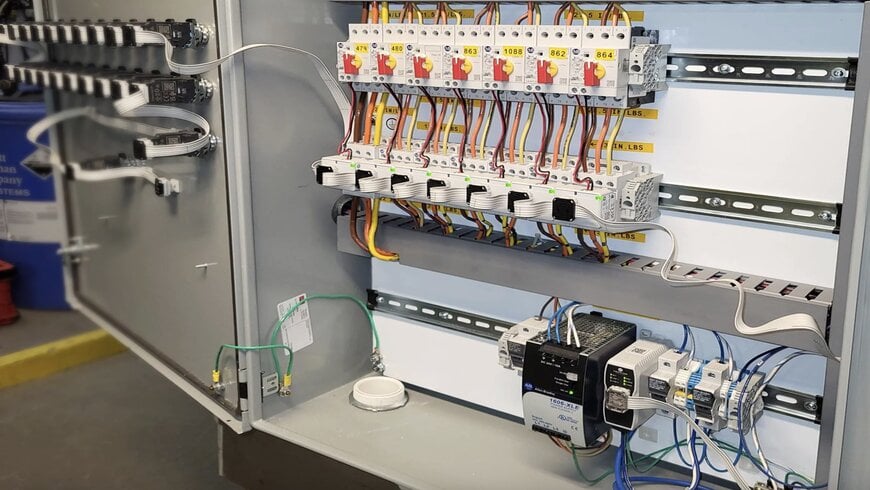
Covestro’s polyurethane production facility in Pittsburgh faced significant reliability challenges within its boiler and chilled water systems. The existing infrastructure consisted of a patchwork of aging NEMA motor starters distributed across seven separate enclosures. This decentralized layout relied on complex conduit systems and long wire runs to remote push buttons, which complicated troubleshooting and increased downtime risks.
Environmental factors further exacerbated these issues. The facility’s boiler room experienced extreme ambient temperatures, ranging from 90°F in winter to 120°F in summer, leading to frequent heat damage of electrical components. The engineering team required a consolidated, modern solution to replace the scattered enclosures, reduce wiring complexity, and improve the safety of a high-temperature area prone to potential flooding from pump cavitation.
Technical Solution and Simplified Integration
Covestro became the first global adopter of Rockwell Automation’s EtherNet/IP In-Cabinet Solution. This technology was selected specifically for its ability to replace traditional point-to-point control wiring bundles with a streamlined architecture using ribbon cables and Ethernet connectivity.
The implementation involved designing a new consolidated control panel to manage:
- Chilled Water System: Two pumps.
- Boiler System: Five pumps.
- Future Expansion: Built-in capacity for three additional units.
The technical shift focused on reducing the manual labor of electrical assembly. Rather than wiring multiple conductors for every push button, indicator light, and remote I/O connection, technicians utilized a single ribbon cable to link all interface devices. Overload wiring was also simplified to just two wires per device, significantly reducing the bulk within the enclosure.
Quantifiable Results in Productivity and Maintenance
The deployment delivered a significant reduction in labor and a cleaner technical footprint:
Quantifiable Results in Productivity and Maintenance
The deployment delivered a significant reduction in labor and a cleaner technical footprint:
- Assembly Efficiency: The team saved more than 60% of traditional panel build time.
- Rapid Deployment: The entire build—including layout, drilling, rail installation, and mounting—was completed in only two days, eliminating the need for scheduled weekend work.
- Infrastructure Consolidation: Seven legacy enclosures were replaced by a single modern enclosure, reducing the amount of hardware exposed to extreme temperatures.
- Programming and Scalability: The modular design allowed for straightforward programming and provided the facility with the ability to add new devices with minimal reconfiguration.
Operational Value and Future Upgrades
By migrating to a unified EtherNet/IP architecture, Covestro improved the accessibility and maintainability of its boiler room operations. The reduction in wiring bulk not only simplified diagnostics but also removed heat-damaged legacy hardware that had previously required ad-hoc repairs.
The facility intends to further optimize its power management by evaluating next-generation electronic overload relays. These components will add current monitoring and remote reset capabilities, providing the diagnostic depth necessary for long-term 24/7 operational resilience.
Edited by Romila DSilva, Induportals Editor, with AI assistance.
By migrating to a unified EtherNet/IP architecture, Covestro improved the accessibility and maintainability of its boiler room operations. The reduction in wiring bulk not only simplified diagnostics but also removed heat-damaged legacy hardware that had previously required ad-hoc repairs.
The facility intends to further optimize its power management by evaluating next-generation electronic overload relays. These components will add current monitoring and remote reset capabilities, providing the diagnostic depth necessary for long-term 24/7 operational resilience.
Edited by Romila DSilva, Induportals Editor, with AI assistance.
