
www.magazine-industry-usa.com
09
'26
Written on Modified on
Corn oil recovery technology increases ethanol plant yields
Dakota Spirit Ethanol implemented a new separation process to recover more distillers corn oil from ethanol production, increasing oil yields by up to 30%.
www.alfalaval.com
Dakota Spirit Ethanol operates a bioethanol plant in Spiritwood, North Dakota, producing renewable fuel from corn as well as co-products such as distillers grains and distillers corn oil (DCO). In ethanol plants, DCO represents a valuable by-product widely used in biofuel and feed markets. Improving oil recovery therefore directly affects plant profitability and resource efficiency.
However, conventional recovery methods typically extract oil from the syrup stream after evaporation. In this configuration, part of the oil remains trapped in the solid fraction produced during stillage dewatering. As a result, a significant portion of recoverable oil is lost in the process. Dakota Spirit sought a solution capable of capturing this oil earlier in the production chain, before it becomes embedded in the solids. The objective was to increase oil yield without disrupting the core ethanol production process or requiring complex plant modifications.
Shifting oil extraction to the front of the process
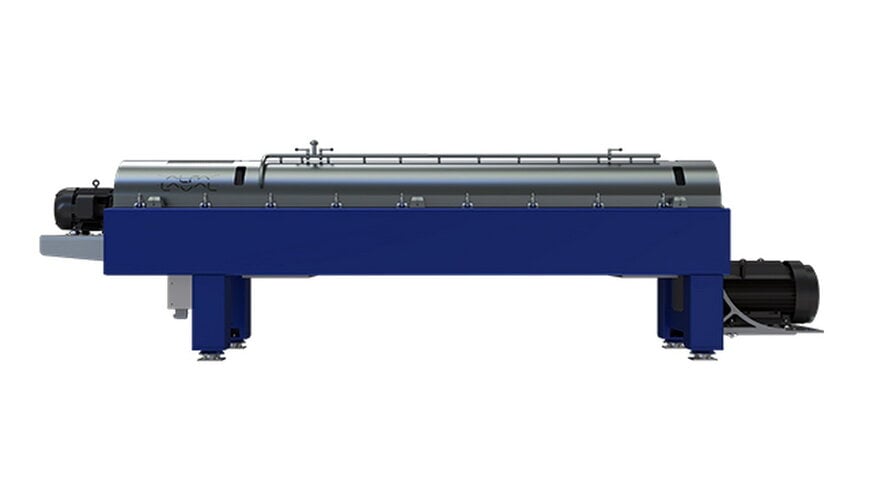
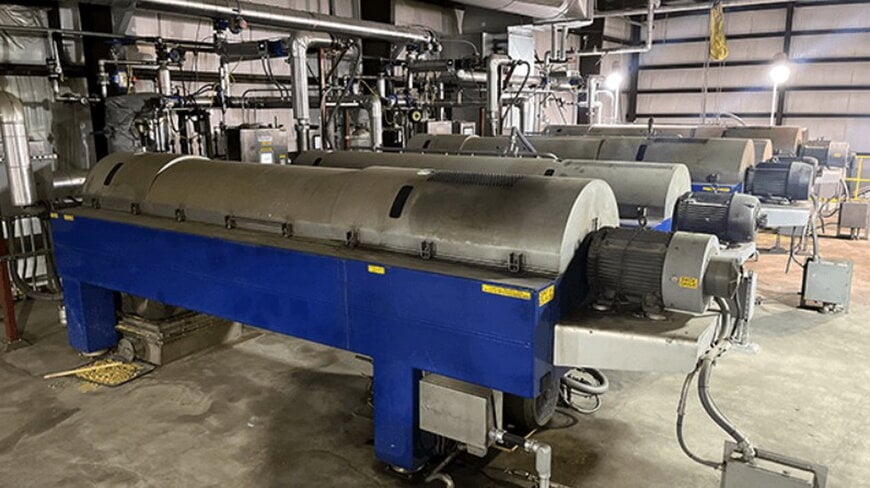
To address this challenge, the plant adopted a separation approach that targets oil recovery from whole stillage, the liquid stream exiting the beer column prior to dewatering. This modification enables the plant to extract free oil before it is captured in the cake produced by conventional decanters. The implemented solution relies on a decanter centrifuge designed for high-temperature processing of stillage. Unlike standard decanters, which prioritize solids removal, the equipment maintains solids in suspension so that the lighter oil fraction rises to the surface and can be separated efficiently.
The oil layer is then skimmed off while the remaining slurry continues to the plant’s existing dewatering equipment. This configuration allows the facility to recover oil without compromising downstream operations or solids processing.
Validation through pilot testing
Before full deployment, the ethanol producer conducted extensive testing to confirm the technical and economic viability of the approach. Initial trials were followed by a year-long on-site test with a full-scale machine integrated into the plant’s production line. This evaluation allowed the operator to establish a mass balance and verify how the new separation stage would affect throughput, energy consumption, and oil recovery performance under real operating conditions.
The testing phase was particularly important because the whole stillage flow rate is significantly higher than syrup streams traditionally used for oil extraction. In a plant producing roughly 100 million gallons of ethanol per year, the stillage flow can reach around 1,000 gallons per minute, requiring equipment capable of handling large process volumes.
Results: higher oil recovery and improved process efficiency
Following installation in 2024, the ethanol plant reported a substantial improvement in oil recovery. By extracting oil from whole stillage rather than syrup, the facility increased distillers corn oil yields by up to 30%, depending on feedstock characteristics and operating conditions. The new configuration enables the plant to capture oil that previously remained trapped in the solid cake produced by stillage decanters. For ethanol producers, this additional oil stream represents a significant revenue source because DCO is widely used as a feedstock for renewable diesel and other biofuel applications.
Beyond higher yields, the technology integrates relatively easily into existing ethanol plants. Installation typically requires the decanter unit itself, surge tanks for stillage and oil storage, and auxiliary pumps and ventilation equipment.
Strategic importance for ethanol producers
Bioethanol production is characterized by high production volumes and relatively narrow margins. As a result, improvements in by-product recovery can significantly affect overall plant economics. By recovering oil earlier in the process and reducing losses during dewatering, the ethanol plant was able to increase the value extracted from its corn feedstock without modifying the fermentation or distillation stages.
For producers operating in the competitive biofuels market, technologies that improve distillers corn oil recovery provide a practical way to enhance profitability while making better use of existing process streams.
Edited by Industrial Journalist, Evgeny Churilov – AI Powered.
www.alfalaval.com
