
www.magazine-industry-usa.com
18
'26
Written on Modified on
Rockwell Automation Enables Digital Twin Commissioning in Brazil
Emulate3D-based virtual commissioning reduces project time by 60% and improves automation accuracy for intralogistics systems.
www.rockwellautomation.com
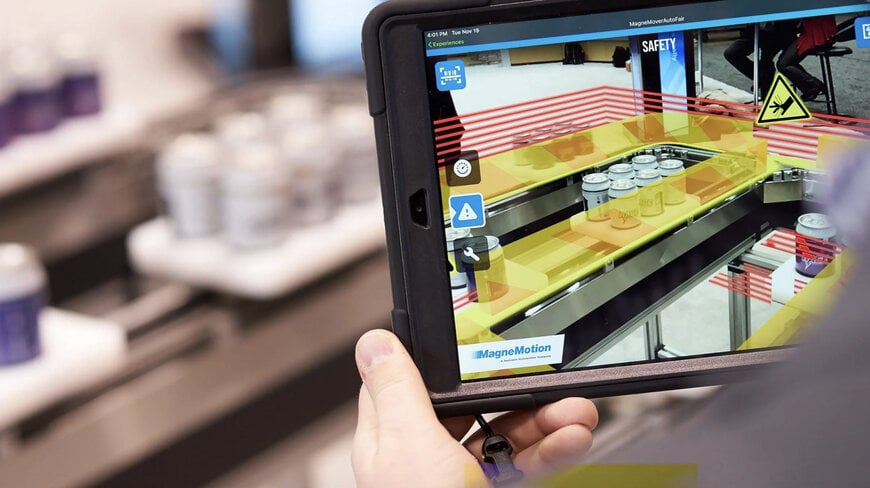
In intralogistics, retail distribution, food and beverage processing, and automotive manufacturing, automation projects increasingly require shorter delivery cycles, higher system precision and reduced commissioning risk. Rockwell Automation has implemented its digital twin and virtual commissioning technology at Brazil-based Falcare Industrial Equipment, enabling simulation-driven validation of complex automation systems before physical assembly.
Falcare, with more than 50 years of experience in industrial equipment integration, sought to reduce rework during field implementation and improve the predictability of mechanical and control system performance. To achieve this, the company deployed Rockwell Automation’s Emulate3D™ platform to simulate robot kinematics, conveyor dynamics and control logic behavior in a virtual environment.
Digital twin replaces physical prototyping
Traditional commissioning processes often rely on physical prototyping and late-stage testing, which can lead to iterative adjustments, delays and additional cost. By adopting a digital twin approach, Falcare created a dynamic virtual model of complete automation systems, integrating mechanical components and programmable control logic into a single simulation environment.
The platform enabled pre-validation of system behavior, identification of mechanical inconsistencies and verification of control sequences prior to equipment construction. This reduced uncertainty during on-site commissioning and minimized corrective interventions after installation.
Measurable impact on delivery and operational efficiency
Following implementation, Falcare reported a 60% reduction in project execution time, accelerating customer demonstrations and shortening overall delivery schedules. Early-stage digital validation improved design accuracy and reduced the need for field rework.
The virtual modeling environment also supported more informed engineering decisions by enabling realistic simulation of throughput, motion profiles and system responses under varying operating conditions. This contributed to improved resource utilization and lower material waste.
Energy consumption was optimized through analysis of conveyor speeds, robotic motion patterns and system sequencing within the simulation, supporting more sustainable automation system design.
Integration of mechanics and control logic
Prior to adopting Rockwell Automation’s tools, Falcare evaluated alternative simulation platforms but encountered limitations in modeling scale, mechanical-control integration and data processing capacity.
Emulate3D provided integrated simulation of both mechanical structures and automation control logic, allowing full system emulation before commissioning. This capability supported validation of programmable logic controller (PLC) behavior and detection of physical mismatches at an early stage.
Application in intralogistics engineering
The implementation establishes a digital twin workflow in intralogistics engineering, particularly relevant for automated storage, material handling and conveyor-based distribution systems.
By replacing conventional prototype-based validation with immersive digital simulation, Falcare can demonstrate system functionality earlier in the sales cycle, enhance post-sales technical support through improved system visibility and deliver automation solutions with reduced implementation risk and improved cost efficiency.
www.rockwellautomation.com
